Showing posts with label Unit 2-Post 1. Show all posts

Sunday, September 7, 2014

MassMedia: What is Research? (U2-P1) Fa14

Research is:

“Disciplined inquiry...studying something in a planned manner and reporting it so that others can replicate the process” (Frey et al.)

Keywords: planned, reporting and replicate
What do they mean in this context?

Research, as discussed here, is more than "research" done at the library.  Instead of reading through books and online materials for answers that some other researcher has found, you conduct original research on your own to find the answer.  That is, you conduct an experiment or a survey or a textual analysis or use some other research method to find the answer.  Somebody is not telling you an answer in a book or report, you are finding the answer to your research question on your own.

Two types:
  • Scholarly 
    • conducted to promote public access to new knowledge
    • usually conducted by a professor at a university
  • Proprietary
    • conducted for a specific audience, results not shared
    • usually conducted by a research at a company

Why are results not shared in proprietary research?
Could you give examples of each of the two types?
Which of the two types of research would you be more likely to do in the future?

How does this discussion of research relate to the earlier discussion of science?


Share this post with others. See the Twitter, Facebook and other buttons below.
Please follow, add, friend or subscribe to help support this blog.
See more about me at my web site WilliamHartPhD.com.




Saturday, August 30, 2014

MediaTech: Why Study the History of Media Tech? (U2-P1) Fa14

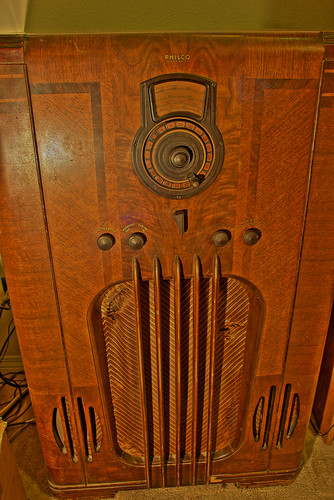
Philco High-Fidelity
Source: Flickr (CC - KN6KS) 
Why Study the History of Media Tech?

  • To satisfy our curiosity.
  • To gain an appreciation for the work done and the progress made.
  • To show a little respect for those who came before us.
  • To gain a sense of identity w/ community.
  • To learn from the past to help understand the future.


Source: Based on Hart, 1999.


Share this post with others. See the Twitter, Facebook and other buttons below.
Please follow, add, friend or subscribe to help support this blog.
See more about me at my web site WilliamHartPhD.com.


Friday, August 29, 2014

DigPhotog: Photo Composition (U2-P1) Fa14

Remember our bumper-sticker saying: "You don't take a photo, you make a photo"?

Put another way: You compose a photograph.  You don't just take it.

Composition is the arrangement of the objects in the photograph or any other work of art.  As a photographer you have some control of this arrangement in your photograph.  You can move objects around.  You can move yourself around to shoot your photograph from a different perspective.  You take some control over your environment and not just take a photo of what you are given.

In general there are rules of composition that are used in art in general and photography specifically.

One of the best online sources for an introduction to the rules (or guidelines) of photo composition can be found at Photoinf.com.  Go to this site and study carefully the six rules of composition discussed there.

Now, how would you apply these rules in your photograph.  Go try it.  Now go take some photos -- I mean go make some photos.

Of course, there is more to composition than the above, but the above are the basics.

For example, Itten's contrasts provide another way of looking at and exploring composition.  For an online exercise using Itten's contrasts, see The 12 Days of Itten’s Contrasts from the Wild Beat blog.


To go beyond the above basics about composition, I'd recommend The Photographer's Eye: Composition and Design for Better Digital Photos


Share this post with others. See the Twitter, Facebook and other buttons below.
Please follow, add, friend or subscribe to help support this blog.
See more about me at my web site WilliamHartPhD.com.


InterculturalCom: What is Culture? (U2-P1) Fa14

What is Culture?

A 19th century approach to culture:
  • cultured: a high state of Western civilization.

Over 200 definitions in the literature.

Culture is "the set of shared knowledge that influences a particular group of peoples' thoughts and behavior" (Hart).

So, if you had to define culture in one word, what would that word be?

Knowledge.

So where is culture?

In our head, our brain?

How did it get there?

We learned it.  Culture is learned and itt is there between our ears.

As members of cultural groups, what knowledge do we learn?

Language, beliefs, values, history, rituals, etc.

Who teaches us the culture?


Share this post with others. See the Twitter, Facebook and other buttons below.
Please follow, add, friend or subscribe to help support this blog.
See more about me at my web site WilliamHartPhD.com.


Sunday, January 26, 2014

GlobalMedia: Important Global Communication Issues (U2-P1) SP14


List major global issues (“controversies”) relevant to an understanding of international communication.
  • Communication, TDF (transborder data flow), and National Sovereignty^
  • Increasing Concentration & Transnationalization
  • Deregulation and Privatization
  • The “Flow” Controversy
  • The “News Values” Controversy (Biases in News)
  • Media Imperialism (Anglo-American Dominance)^
  • Communication Policies
  • Protection and Licensing of Journalists^
  • Codes of Ethics for Media Practice
  • The Status of Women in INC^
  • “New World Information and Communication Order”^

^ To be covered in more detail later.
(Originally based on Frederick, 1993; updated)


Share this post with others. See the Twitter, Facebook and other buttons below.
Please follow, add, friend or subscribe to help support this blog.
See more about me at my web site WilliamHartPhD.com.


Friday, January 24, 2014

DigPhotog: Photo Composition (U2-P1) Sp14

Remember our bumper-sticker saying: "You don't take a photo, you make a photo"?

Put another way, you compose a photograph.  You don't just take it.

Composition is the arrangement of the objects in the photograph or any other work of art.  As a photographer you have some control of this arrangement in your photograph.  You can move objects around.  You can move yourself around to shoot your photograph from a different perspective.  You take some control over your environment and not just take a photo of what you are given.

In general there are rules of composition that are used in art in general and photography specifically.

One of the best online sources for an introduction to the rules (or guidelines) of photo composition can be found at Photoinf.com.  Go to this site and study about the six rules of composition discussed there.

Now, how would you apply these rules in your photograph.  Go try it.  Now go take some photos -- I mean go make some photos.

Of course, there is more to composition than the above, but the above are the basics.


To go beyond the above basics about composition, I'd recommend The Photographer's Eye: Composition and Design for Better Digital Photos

I'd especially recommend the section in the book Itten's contrasts.

For an online exercise using Itten's contrasts, see The 12 Days of Itten’s Contrasts from the Wild Beat blog.


Share this post with others. See the Twitter, Facebook and other buttons below.
Please follow, add, friend or subscribe to help support this blog.
See more about me at my web site WilliamHartPhD.com.


Tuesday, September 10, 2013

MassMedia: What is Research? (U2-P1) Fa13

Research is:

“Disciplined inquiry...studying something in a planned manner and reporting it so that others can replicate the process” (Frey et al.)

Keywords: planned, reporting and replicate
What do they mean in this context?

Research, as discussed here, is more than "research" done at the library.  Instead of reading through books and online materials for answers that some other researcher has found, you conduct original research on your own to find the answer.  That is, you conduct an experiment or a survey or a textual analysis or use some other research method to find the answer.  Somebody is not telling you an answer in a book or report, you are finding the answer to your research question on your own.

Two types:
  • Scholarly 
    • conducted to promote public access to new knowledge
    • usually conducted by a professor at a university
  • Proprietary
    • conducted for a specific audience, results not shared
    • usually conducted by a research at a company

Why are results not shared in proprietary research?
Could you give examples of each of the two types?
Which of the two types of research would you be more likely to do in the future?

How does this discussion of research relate to the earlier discussion of science?


Share this post with others. See the Twitter, Facebook and other buttons below.
Please follow, add, friend or subscribe to help support this blog.
See more about me at my web site WilliamHartPhD.com.


Wednesday, September 4, 2013

DigPhotog: Apps for the Dig Photog Beginner - Flickr, Instagram & Pinterest (U2-P1) Fa13

As beginning digital photogs, there are obvious apps and online services that you should be familiar with and should be using.  Apps and online services like Flickr and Instagram come to mind.

However, a little less obvious app/service that you should be using is Pinterest. Pinterest can help in two key ways.  It can help you collect and share photographs from around the web that you like.  It can also help you specifically collect photographs from photog mentors that you should have.


In his book, The BetterPhoto Guide to Digital Photography, Miotke suggests that beginning photographers should keep a visual notebook.
"One excellent way to define your goals is to keep a collection of images that inspire you. You could simply write down a list of photo ideas, but as photographers are generally visual people, it’s usually more effective to collect pictures. Subscribe to magazines or visit the library. Look though catalogs, books, and Web sites like BetterPhoto.com—anything with the kind of photographs you enjoy" (Miotke)
I agree.  However, we can use Pinterest and update Miotke's idea of a visual notebook.


There are also photo editing apps/services, but we'll get to those later.


Friday, August 30, 2013

MediaTech: Why Study the History of Media Tech? (U2-P1) fa13

Philco High-Fidelity
Source: Flickr (CC - KN6KS) 
Why Study the History of Media Tech?

  • To satisfy our curiosity.
  • To gain an appreciation for the work done and the progress made.
  • To show a little respect for those who came before us.
  • To gain a sense of identity w/ community.
  • To learn from the past to help understand the future.


Source: Based on Hart, 1999.


Share this post with others. See the Twitter, Facebook and other buttons below.
Please follow, add, friend or subscribe to help support this blog.
See more about me at my web site WilliamHartPhD.com.


InterculturalCom: What is Culture? (U2-P1) Fa13

What is Culture?

A 19th century approach to culture:
  • cultured: a high state of Western civilization.

Over 200 definitions in the literature.

Culture is "the set of shared knowledge that influences a particular group of peoples' thoughts and behavior" (Hart).

So, if you had to define culture in one word, what would that word be?

Knowledge.

So where is culture?  

In in our brains?

How did it get there?

We learned it.  Culture is learned.

As members of cultural groups, what knowledge do we learn?

Language, beliefs, values, history, rituals, etc.

Who teaches us the culture?


Share this post with others. See the Twitter, Facebook and other buttons below.
Please follow, add, friend or subscribe to help support this blog.
See more about me at my web site WilliamHartPhD.com.


Tuesday, February 5, 2013

DigPhotog: Photo Composition (U2-P1) Sp13

Remember our bumper-sticker saying: "You don't take a photo, you make a photo"?

One of the best online sources for an introduction to photo composition can be found at
Photoinf.com

Let's take a look.


Of course, there is more to composition than the above, but the above are the basics.


To go beyond the above basics about composition, I'd recommend The Photographer's Eye: Composition and Design for Better Digital Photos

I'd especially recommend the section in the book Itten's contrasts.

For an online exercise using Itten's contrasts, see The 12 Days of Itten’s Contrasts from the Wild Beat blog.


Share this post with others. See the Twitter, Facebook and other buttons below.
Please follow, add, friend or subscribe to help support this blog.
See more about me at my web site WilliamHartPhD.com.


Thursday, January 24, 2013

GlobalMedia: Important Global Communication Issues (U2-P1) SP13


List major global issues (“controversies”) relevant to an understanding of international communication.
  • Communication, TDF, and National Sovereignty^
  • Increasing Concentration & Transnationalization
  • Deregulation and Privatization
  • The “Flow” Controversy
  • The “News Values” Controversy (Biases in News)
  • Media Imperialism (Anglo-American Dominance)^
  • Communication Policies
  • Protection and Licensing of Journalists^
  • Codes of Ethics for Media Practice
  • The Status of Women in INC^
  • “New World Information and Communication Order”^

^ To be covered in more detail later.
(Originally based on Frederick, 1993; updated)


Share this post with others. See the Twitter, Facebook and other buttons below.
Please follow, add, friend or subscribe to help support this blog.
See more about me at my web site WilliamHartPhD.com.


Monday, September 10, 2012

MassMedia: What is Research? (U2-P1)

Research is:

“Disciplined inquiry...studying something in a planned manner and reporting it so that others can replicate the process” (Frey et al.)

Keywords: planned, reporting and replicate
What do they mean in this context?

Research, as discussed here, is more than "research" done at the library.  Instead of reading through books and online materials for answers that some other researcher has found, you conduct original research on your own to find the answer.  That is, you conduct an experiment or a survey or a textual analysis or some other research method to find the answer.  Somebody is not telling you an answer in a book or report, you are finding the answer to your research question on your own.

Two types:
  • Scholarly 
    • conducted to promote public access to new knowledge
    • usually conducted by a professor at a university
  • Proprietary
    • conducted for a specific audience, results not shared
    • usually conducted by a research at a company

Why are results not shared in proprietary research?
Could you give examples of each of the two types?
Which of the two types of research would you be more likely to do in the future?

How does this discussion of research relate to the earlier discussion of science?


Share this post with others. See the Twitter, Facebook and other buttons below.
Please follow, add, friend or subscribe to help support this blog.
See more about me at my web site WilliamHartPhD.com.


Wednesday, September 5, 2012

MediaTech: Why Study the History of Media Tech? (U2-P1) fa12

Philco High-Fidelity
Source: Flickr (CC - KN6KS) 


  • To satisfy our curiosity.
  • To gain an appreciation for the work done and the progress made.
  • To show a little respect for those who came before us.
  • To gain a sense of identity w/ community.
  • To learn from the past to help understand the future.


Source: Based on Hart, 1999.

Share this post with others. See the Twitter, Facebook and other buttons below.
Please follow, add, friend or subscribe to help support this blog.
See more about me at my web site WilliamHartPhD.com.


Tuesday, September 4, 2012

InterculturalCom: What is Culture? (U2-P1) fa12


What is Culture?

A 19th century approach to culture:
  • cultured: a high state of Western civilization.

Over 200 definitions in the literature.

"Culture is the set of shared knowledge that influences a particular group of peoples' thoughts and behavior" (Hart).

So, if you had to define culture in one word, what would that word be?

Knowledge.

So where is culture?

In in our brains.

How did it get there?

We learned it.  Culture is learned.

As members of cultural groups, what knowledge do we learn?

Language, beliefs, values, history, rituals, etc.

Who teaches us the culture?


See more at my web site WilliamHartPhD


Share this post with others. See the Twitter, Facebook and other buttons below.
Please follow, add, friend or subscribe to help support this blog.
See more about me at my web site WilliamHartPhD.com.


Thursday, February 16, 2012

GlobalMedia: Important Global Communication Issues (U2-P1)

List major global issues (“controversies”) relevant to an understanding of international communication.
  • Communication, TDF, and National Sovereignty^
  • Increasing Concentration & Transnationalization
  • Deregulation and Privatization
  • The “Flow” Controversy
  • The “News Values” Controversy (Biases in News)
  • Media Imperialism (Anglo-American Dominance)^
  • Communication Policies
  • Protection and Licensing of Journalists^
  • Codes of Ethics for Media Practice
  • The Status of Women in INC^
  • “New World Information and Communication Order”^

^ To be covered in more detail later.
(Originally based on Frederick, 1993; updated)


Share this post with others. See the Twitter, Facebook and other buttons below.
Please follow, add, friend or subscribe to help support this blog.
See more about me at my web site WilliamHartPhD.com.


Wednesday, September 7, 2011

MediaTech: Why Study the History of Media Tech? (U2-P1)

Philco High-Fidelity
Source: Flickr (CC - KN6KS) 


  • To satisfy our curiosity.
  • To gain an appreciation for the work done and the progress made.
  • To show a little respect for those who came before us.
  • To gain a sense of identity w/ community.
  • To learn from the past to help understand the future.


Source: Based on Hart, 1999.

See more at my web site WilliamHartPhD.com.


Tuesday, September 6, 2011

InterculturalCom: What is Culture? (U2-P1)

What is Culture?

A 19th century approach to culture:
  • cultured: a high state of Western civilization.

Over 200 definitions in the literature.

"Culture is the set of shared knowledge that influences a particular group of peoples' thoughts and behavior" (Hart).

So, if you had to define culture in one word, what would that word be?

Knowledge.

So where is culture?

In in our brains.

How did it get there?

We learned it.  Culture is learned.

As members of cultural groups, what knowledge do we learn?

Language, beliefs, values, history, rituals, etc.

Who teaches us the culture?


See more at my web site WilliamHartPhD.com.