Tuesday, September 1, 2015

HistMedia: History and Interdisciplines (W2-P3) Fa15


When talking about the history of a field of study and especially the beginnings of that field of study, a key term should be discussed.

Interdiscipline: "a field of scholars who identify with various disciplines but share a common interest in a theme that crosses traditional [academic] boundaries“ (Littlejohn).

If we want to get metaphorical, we could think of an interdiscipline as an oasis.

Oasis: "A fertile spot in a desert where water is found" (Oxford Dictionaries).

An oasis (public domain image, Wikipedia)


What is the relationship between an interdiscipline and an oasis?


At what point in the historical development of a field of study does the oasis or interdiscipline ideas fit in?  When was communication study/media study an interdiscipline?  The beginning?  The middle?  Now?

The beginning, especially.  Why?


Share this post with others. See the Twitter, Facebook and other buttons below.
Please follow, add, friend or subscribe to help support this blog.
See more about me at my web site WilliamHartPhD.com.




HistMedia: What is History and Why Study History? (W2-P2) Fa15

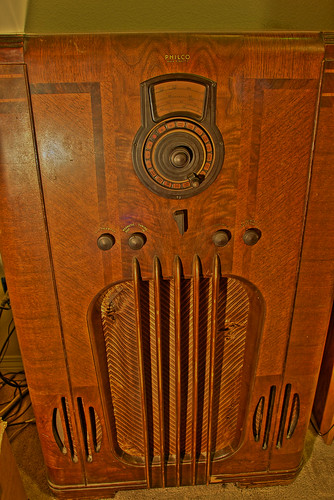
Philco High-Fidelity
Source: Flickr (CC - KN6KS) 
History: "The study of past events, particularly in human affairs" (Oxford Dictionaries), e.g. Italian history, history of science, art history.

Is history the telling of a story, a narrative?

Narrative: "A spoken or written account of connected events" (Oxford Dictionaries)

What's the difference between the above two definitions?

If we see history as narrative, we might start to think of characters (people) in a story, the plot of the story (the cause-effect of connected events), yes?


In the case of our study of media history, the characters in our story will inventors of media technologies and key media scholars.  In some ways, we may also see some media technologies as characters in our story.


***

What is the difference between "The History of Something" and "A History of Something"?

Example: "A History of Communication Study" by Everett Rogers

The "A" suggests a recognition of a limited perspective.  How so?

Historiography: "The study of historical writing" (Oxford Dictionaries).
Or put another way, it is the study of the study of history.


So, in short, there may be limitation or weaknesses in any history told or written.
Can we fix that?  How?


***
And, now an especially important questions to ask as we embark on a study of media history.

Why study the history of media or any history for that matter?*
  • To satisfy our curiosity.
  • To gain an appreciation for the work done and the progress made.
  • To show a little respect for those who came before us.
  • To gain a sense of identity with a community.
  • To learn from the past to help understand the future.


*Source: Based on Hart, 1999.


Share this post with others. See the Twitter, Facebook and other buttons below.
Please follow, add, friend or subscribe to help support this blog.
See more about me at my web site WilliamHartPhD.com.


HistMedia: In Honor of Everett M. Rogers (W2-P1) Fa15


I teach this history of media course in honor of Ev.
He was my professor, adviser, co-author -- and my mentor.  He is missed.

Everett M. Rogers (1931-2004)

Ev was a noted scholar in our field.  His key contribution to the field is his book


Ev also had a keen interest in and an appreciation for the history of our field.  Out of this interest and appreciation, he wrote


Now, let's a little of Ev's story through a video.
"Ev Rogers was a leader in the development of the communication field. His early research focused on diffusion of innovations, opinion leaders, and the adoption of new ideas, concepts that framed much of his work throughout his career. He is remembered as a gifted teacher, a generous mentor, and a prolific scholar, with more than thirty books and hundreds of articles in publication at the time of his death in 2004. Importantly, Ev Rogers was a change agent, who sought to use scholarly research to advance policies and practices that improved peoples' lives. This documentary features rare footage taped just prior to his death, exploring his early life on an Iowa farm, professional choices, love of teaching and research, and ideas about diffusion. Writer/Producer: Glenda R. Balas, University of New Mexico; Videographer/Editor: Jason Balas, University of North Texas."


Share this post with others. See the Twitter, Facebook and other buttons below.
Please follow, add, friend or subscribe to help support this blog.
See more about me at my web site WilliamHartPhD.com.