Monday, April 8, 2019

MediaResearch: Textual Analysis (W14-P1) Sp19


We've discussed previously experiments and surveys as research methods.  Here's a third research method, a third way to answer some research questions.

In experiments, you study subjects.  In surveys, you study respondents.  What do you study in textual analysis?

What is textual analysis?

“A research method that uses measurement techniques to classify and evaluate the characteristics of spoken, written, artistic, and electronic documents”(FBFK).

What are the various types of texts analyzed in textual analysis? What is a text?
  • Written --letters, diaries, transcriptions, books, tweets, newspaper articles, etc.
  • Audio -- conversations, lyrics, etc.
  • Visual -- paintings, photographs, architecture, etc.
  • Broadcasts -- film scripts, newscasts, etc.
Texts are the communication media which carry meaning.
Question: What is not a text?


Two important types of textual analysis: rhetorical criticism and content analysis relevant to mass media.
  • Rhetorical Criticism
    • “research involving description, analysis, interpretation, and evaluation of persuasive uses of communication”(FBFK).
    • Note: We are not using the everyday definition of rhetoric.
  • Content Analysis
    • “a research technique for making inferences by systematically identifying specified characteristics in a text”(FBFK).


Some types of rhetorical criticism?

Types…
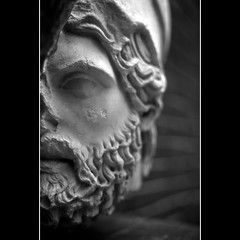
greek statue head
Photo by Kevin Rawlings.
Used under creative commons.
  • classical rhetoric: focus on oral persuasive acts in the context of government. Aristotelian in focus…ethos, pathos, logos, etc.
    • Credibility, emotional appeal, evidence/reasoning
    • Watch or listen to a famous speech.  How would you judge the rhetoric?  Was it persuasive?  Why?  How?
  • contemporary rhetorical criticism: broader perspective -- includes verbal and nonverbal, face-to-face and mediated, not just politics


What is content analysis and how is it conducted?

Content Analysis
“a research technique for making inferences by systematically identifying specified characteristics in a text”(FBFK).

Steps in using this method…
1. Select text(s)
2. Unit of Analysis (what specifically are you going to study?  Example: specific words, parts of an image, etc.
3. Categories… put into nominal categories
4. Coding … analyze text
5. Summarize


Share this post with others. See the Twitter, Facebook and other buttons below.
Please follow, add, friend or subscribe to help support this blog.
See more about me at my web site WilliamHartPhD.com.




Monday, April 1, 2019

MediaResearch: Surveys: Survey Questions or Items (W13-P2) Sp19


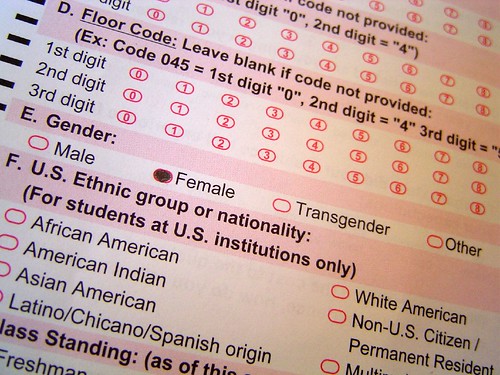
survey question
Photo by Robyn Lee.  Used under creative commons
A survey usually begins with some demographic questions or "items".  Since there are sometimes no questions marks, it would be best to refer to them as items.

Demographics questions/items:
“survey questions that inquire about respondents’ personal characteristics, such as name, age, gender, education”(FBFK).

What demographic questions do you ask?
Only ask demographics that will help you interpret results.  Careful with long surveys.  Why?


Once you are finished with your demographic questions, next you need to ask questions that help you answer your specific research question(s).  You need to ask questions that measure your independent and dependent variables.


What are the general types of questions (or “items”) that can appear on a survey?
  • Knowledge items
  • Attitude items
  • Behavior items
With a survey you are usually measuring what a respondent knows, their likes or dislikes or some aspect of their past behaviors.

If you were writing a survey on social media use, what would be some example questions/items you may put on your survey?  Knowledge?  Attitude?  Behavior?


Do you just have your respondents choose among some predetermined choices or do you leave them some space to respond in whatever they choose?  Put another way, what are close-ended and open-ended survey questions?
  • Closed-ended items
    • Scales-- e.g., Likert scale
    • Use stats to analyze responses to each item and stats to summarize findings
  • Open-ended items
    • Words-- Transcribe responses and use textual analysis to summarize findings


Once you have finished a draft of your survey questions, you'll need to go back and proof-read.  As you are checking spelling and grammar, also keep the following in mind.

What are some tips on wording survey items?
  • Keep items short.
  • Avoid loading or leading questions.
    • “Don’t you think rich professors should be denied a pay raise?”
  • Avoid double-barreled wording.
    • “I support family values and prayer in school.”
  • Avoid double negatives.
    • “Do you never avoid conflict?”


Share this post with others. See the Twitter, Facebook and other buttons below.
Please follow, add, friend or subscribe to help support this blog.
See more about me at my web site WilliamHartPhD.com.


MediaResearch: Surveys: What Are They And How To Do Them. (W13-P1) Sp19


What is a survey? 

A research method in which respondents representing a specific population are asked questions concerning their knowledge, beliefs, attitudes, and behaviors (based on FBFK).

Scholarly use: e.g., correlational design.

Types of applied use: e.g.,  political polls and market research (e.g., Nielsen)

What are the general steps in constructing and giving a survey?

  1. Identify the purpose of the survey
    1. What is the ultimate purpose of a survey in a research study?
  2. Determine who to ask and what to ask.
  3. Write survey
  4. Give survey
    1. Let participants know if there are any risks.
    2. Let participants know their rights.
    3. Right to not participate, to stop participating, etc.
    4. Thank the participants.
  5. Tally results
  6. Report results


What information should be included on a survey (excluding survey questions)?

Title: A Study of Social Media Use by College Students
Who: Dr. Hart, Department of Mass Communications & Journalism
Where:  Norfolk State University, Norfolk, VA
Any Questions: Send to Dr. Hart
Statement of Purpose:
This study seeks your opinion about methods courses for a research study. Your responses are anonymous.  Thank You.
Rights: In addition, if for whatever reason you do not feel comfortable responding to any or all items, please leave it(them) blank.


To be continued...


Share this post with others. See the Twitter, Facebook and other buttons below.
Please follow, add, friend or subscribe to help support this blog.
See more about me at my web site WilliamHartPhD.com.