Showing posts with label American Gothic. Show all posts

Tuesday, January 16, 2018

DigPhotog: Intro to Photography: Photo Criticism II - Andre Cabuche & Kevin Carter (W2-P3) Sp18


Photograph Criticism II

There are a variety of ways of critiquing a photograph.  Below is another way outlined by Andre Cabuche in a Canadian Camera article (2004). Cabuche divides his approach into three parts: technical quality, composition, and emotional appeal.

1. TECHNICAL QUALITY

  • "FOCUS: Is the image sharp? If not, is it intentionally soft and successful?"
  • "CLEANLINESS: Is it free of scratches, dust spots, stains, lens flare, etc?"
  • "EXPOSURE: Is it too light, too dark or just right?"
  • "LIGHTING: Is the lighting too contrasty, too flat or just right?"
  • "COLOURS: Does it have neutral colours or a strange colour cast?"

2. COMPOSITION

  • "BALANCE: Is the image aligned correctly or is it crooked?"
  • "LOGIC: Is the arrangement of the visual elements effective?"
  • "PURPOSE: Is there a strong centre of interest, pattern or design?"
  • "CLARITY: Is it simple, yet complete and without distracting elements?"

3. EMOTIONAL APPEAL

  • "DYNAMIC: Does it grab and keep your attention? Does it have the "wow" factor?"
  • "PROVOCATIVE: Does it excite your imagination, or create a strong emotion in you?"
  • "CREATIVE: Does it show a familiar subject in a new, unusual and yet effective way?"
  • "UNUSUAL: Does it show a very unusual subject in an effective way?"


Use the above approach on Kevin Carter's Pulitzer Prize winning photograph of a starving girl in Sudan.  This photo definitely provokes emotional appeal and raises ethical issues in photojournalism.


Some closing questions:
  • Any similarities or differences between Cabuche's approach and Barrett's approach?
  • What is the relationship between critiquing a photograph and composing a photograph?


Share this post with others. See the Twitter, Facebook and other buttons below.
Please follow, add, friend or subscribe to help support this blog.
See more about me at my web site WilliamHartPhD.com.


DigPhotog: Intro to Photography: Critiquing Photos (W2-P2) Sp18


Photography Criticism


When learning how to critique photographs, a good place to start is with Barrett's book, Criticizing Photographs: An Introduction to Understanding Images.


According to Barret:
  • “Criticism is informed discourse about art to increase understanding and appreciation of art.”

Barrett's Approach to Critiquing Photographs
  • Describe what you see - just the facts, be objective
  • Consider the subject matter
  • Consider how form relates to subject matter.
    • Subject matter + form (focus, contrast, etc.) = content.
  • Let interpretation be communal.
    • Who determines the meaning?  Photographer? Critic?
  • Suggest photographer be silent.
  • Interpret the photograph by questions it raises.
  • Avoid hasty judgments - don't jump to judgement
  • Consider presentational environments.
    • Subject + form + context = content
  • Ask how the photograph would be judged.
  • Consider assumptions/theories - why did the photography do what they did?
  • What are the photographer’s theories about the way the world works?
  • Be honest and open.


Barrett's approach can be summarized as the DIET way of critiquing a photograph.
  1. Describe - just the facts, be objective
  2. Interpret - what does it mean?
  3. Evaluate - is it good or bad, rate it, pass careful judgement
  4. Theorize - why did the photographer take the photo? 

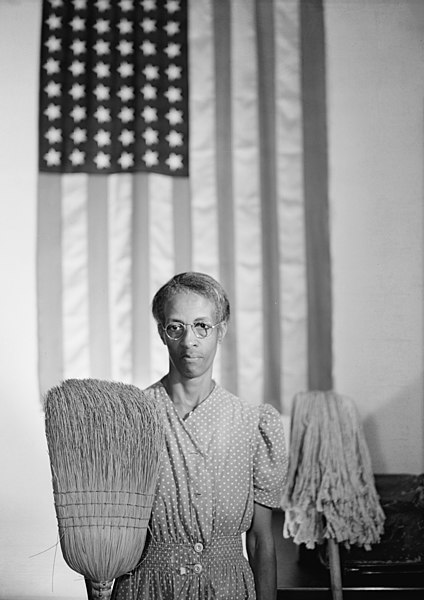
Below is a photo to critique using Barrett's approach.  Start with describe and then...

File:Gordon Parks - American Gothic.jpg
Gordon ParksAmerican Gothic. Portrait of government cleaning
woman Ella Watson. August 1942. (Public domain photo)
   

If you like, you can post below your critique of American Gothic using Barrett's approach.

American Gothic, that sounds familiar.  What was Parks' inspiration for the title of his photo?

For some background on the American Gothic photograph see the clip below starting at about 17:44.


Share this post with others. See the Twitter, Facebook and other buttons below.
Please follow, add, friend or subscribe to help support this blog.
See more about me at my web site WilliamHartPhD.com.


Tuesday, January 19, 2016

DigPhotog: Intro to Photography: Photo Criticism II - Andre Cabuche & Kevin Carter (W2-P3) Sp16


Photograph Criticism II

There are a variety of ways of critiquing a photograph.  Below is another way outlined by Andre Cabuche in a Canadian Camera article (2004). Cabuche divides his approach into three parts: technical quality, composition, and emotional appeal.

1. TECHNICAL QUALITY

  • "FOCUS: Is the image sharp? If not, is it intentionally soft and successful?"
  • "CLEANLINESS: Is it free of scratches, dust spots, stains, lens flare, etc?"
  • "EXPOSURE: Is it too light, too dark or just right?"
  • "LIGHTING: Is the lighting too contrasty, too flat or just right?"
  • "COLOURS: Does it have neutral colours or a strange colour cast?"

2. COMPOSITION

  • "BALANCE: Is the image aligned correctly or is it crooked?"
  • "LOGIC: Is the arrangement of the visual elements effective?"
  • "PURPOSE: Is there a strong centre of interest, pattern or design?"
  • "CLARITY: Is it simple, yet complete and without distracting elements?"

3. EMOTIONAL APPEAL

  • "DYNAMIC: Does it grab and keep your attention? Does it have the "wow" factor?"
  • "PROVOCATIVE: Does it excite your imagination, or create a strong emotion in you?"
  • "CREATIVE: Does it show a familiar subject in a new, unusual and yet effective way?"
  • "UNUSUAL: Does it show a very unusual subject in an effective way?"


Use the above approach on Kevin Carter's Pulitzer Prize winning photograph of a starving girl in Sudan.  This photo definitely provokes emotional appeal and raises ethical issues in photojournalism.


Some closing questions:
  • Any similarities or differences between Cabuche's approach and Barrett's approach?
  • What is the relationship between critiquing a photograph and composing a photograph?


Share this post with others. See the Twitter, Facebook and other buttons below.
Please follow, add, friend or subscribe to help support this blog.
See more about me at my web site WilliamHartPhD.com.


DigPhotog: Intro to Photography: Critiquing Photos (W2-P2) Sp16

Photography Criticism


When learning how to critique photographs, a good place to start is with Barrett's book, Criticizing Photographs: An Introduction to Understanding Images.


According to Barret:
  • “Criticism is informed discourse about art to increase understanding and appreciation of art.”

Barrett's Approach to Critiquing Photographs
  • Describe what you see - just the facts, be objective
  • Consider the subject matter
  • Consider how form relates to subject matter.
    • Subject matter + form (focus, contrast, etc.) = content.
  • Let interpretation be communal.
    • Who determines the meaning?  Photographer? Critic?
  • Suggest photographer be silent.
  • Interpret the photograph by questions it raises.
  • Avoid hasty judgments - don't jump to judgement
  • Consider presentational environments.
    • Subject + form + context = content
  • Ask how the photograph would be judged.
  • Consider assumptions/theories - why did the photography do what they did?
  • What are the photographer’s theories about the way the world works?
  • Be honest and open.


Barrett's approach can be summarized as the DIET way of critiquing a photograph.
  1. Describe - just the facts, be objective
  2. Interpret - what does it mean?
  3. Evaluate - is it good or bad, rate it, pass careful judgement
  4. Theorize - why did the photographer take the photo? 

Below is a photo to critique using Barrett's approach.  Start with describe and then...

File:Gordon Parks - American Gothic.jpg
Gordon ParksAmerican Gothic. Portrait of government cleaning
woman Ella Watson. August 1942. (Public domain photo)
   

If you like, you can post below your critique of American Gothic using Barrett's approach.

American Gothic, that sounds familiar.  What was Parks' inspiration for the title of his photo?

For some background on the American Gothic photograph see the clip below starting at about 19:00.


Share this post with others. See the Twitter, Facebook and other buttons below.
Please follow, add, friend or subscribe to help support this blog.
See more about me at my web site WilliamHartPhD.com.


Tuesday, September 1, 2015

DigPhotog: Intro to Photography: Photo Criticism II - Andre Cabuche & Kevin Carter (W2-P3) Fa15


Photograph Criticism II

There are a variety of ways of critiquing a photograph.  Below is another way outlined by Andre Cabuche in a Canadian Camera article (2004). Cabuche divides his approach into three parts: technical quality, composition, and emotional appeal.

1. TECHNICAL QUALITY

  • "FOCUS: Is the image sharp? If not, is it intentionally soft and successful?"
  • "CLEANLINESS: Is it free of scratches, dust spots, stains, lens flare, etc?"
  • "EXPOSURE: Is it too light, too dark or just right?"
  • "LIGHTING: Is the lighting too contrasty, too flat or just right?"
  • "COLOURS: Does it have neutral colours or a strange colour cast?"

2. COMPOSITION

  • "BALANCE: Is the image aligned correctly or is it crooked?"
  • "LOGIC: Is the arrangement of the visual elements effective?"
  • "PURPOSE: Is there a strong centre of interest, pattern or design?"
  • "CLARITY: Is it simple, yet complete and without distracting elements?"

3. EMOTIONAL APPEAL

  • "DYNAMIC: Does it grab and keep your attention? Does it have the "wow" factor?"
  • "PROVOCATIVE: Does it excite your imagination, or create a strong emotion in you?"
  • "CREATIVE: Does it show a familiar subject in a new, unusual and yet effective way?"
  • "UNUSUAL: Does it show a very unusual subject in an effective way?"


Use the above approach on Kevin Carter's Pulitzer Prize winning photograph of a starving girl in Sudan.  This photo definitely provokes emotional appeal and raises ethical issues in photojournalism.


Some closing questions:
  • Any similarities or differences between Cabuche's approach and Barrett's approach?
  • What is the relationship between critiquing a photograph and composing a photograph?


Share this post with others. See the Twitter, Facebook and other buttons below.
Please follow, add, friend or subscribe to help support this blog.
See more about me at my web site WilliamHartPhD.com.


DigPhotog: Intro to Photography: Critiquing Photos (W2/W3-P2) Fa15

Photography Criticism


When learning how to critique photographs, a good place to start is with Barrett's book, Criticizing Photographs: An Introduction to Understanding Images.


According to Barret:
  • “Criticism is informed discourse about art to increase understanding and appreciation of art.”
  • “Criticism is not a coldly intellectual endeavor.”

Barrett's Approach to Critiquing Photographs
  • Describe what you see - just the facts, be objective
  • Consider the subject matter
  • Consider how form relates to subject matter.
    • Subject matter + form (focus, contrast, etc.) = content.
  • Let interpretation be communal.
    • Who determines the meaning?  Photographer? Critic?
  • Suggest photographer be silent.
  • Interpret the photograph by questions it raises.
  • Avoid hasty judgments - don't jump to judgement
  • Consider presentational environments.
    • Subject + form + context = content
  • Ask how the photograph would be judged.
  • Consider assumptions/theories - why did the photography do what they did?
  • What are the photographer’s theories about the way the world works?
  • Be honest and open.


Barrett's approach can be summarized as the DIET way of critiquing a photograph.
  1. Describe - just the facts, be objective
  2. Interpret - what does it mean?
  3. Evaluate - is it good or bad, rate it, pass careful judgement
  4. Theorize - why did the photographer take the photo? 

Below is a photo to critique using Barrett's approach.  Start with describe and then...

File:Gordon Parks - American Gothic.jpg
Gordon ParksAmerican Gothic. Portrait of government cleaning
woman Ella Watson. August 1942. (Public domain photo)
   

If you like, you can post below your critique of American Gothic using Barrett's approach.

American Gothic, that sounds familiar.  What was Parks' inspiration for the title of his photo?

For some background on the American Gothic photograph see the clip below starting at about 19:00.


Share this post with others. See the Twitter, Facebook and other buttons below.
Please follow, add, friend or subscribe to help support this blog.
See more about me at my web site WilliamHartPhD.com.


Sunday, January 18, 2015

DigPhotog: Intro to Photography: Photo Criticism II - Andre Cabuche & Kevin Carter (W2-P3) Sp15


Photograph Criticism II

There are a variety of ways of critiquing a photograph.  Below is another way outlined by Andre Cabuche in a Canadian Camera article (2004). Cabuche divides his approach into three parts: technical quality, composition, and emotional appeal.

1. TECHNICAL QUALITY

  • "FOCUS: Is the image sharp? If not, is it intentionally soft and successful?"
  • "CLEANLINESS: Is it free of scratches, dust spots, stains, lens flare, etc?"
  • "EXPOSURE: Is it too light, too dark or just right?"
  • "LIGHTING: Is the lighting too contrasty, too flat or just right?"
  • "COLOURS: Does it have neutral colours or a strange colour cast?"

2. COMPOSITION

  • "BALANCE: Is the image aligned correctly or is it crooked?"
  • "LOGIC: Is the arrangement of the visual elements effective?"
  • "PURPOSE: Is there a strong centre of interest, pattern or design?"
  • "CLARITY: Is it simple, yet complete and without distracting elements?"

3. EMOTIONAL APPEAL

  • "DYNAMIC: Does it grab and keep your attention? Does it have the "wow" factor?"
  • "PROVOCATIVE: Does it excite your imagination, or create a strong emotion in you?"
  • "CREATIVE: Does it show a familiar subject in a new, unusual and yet effective way?"
  • "UNUSUAL: Does it show a very unusual subject in an effective way?"


Use the above approach on Kevin Carter's Pulitzer Prize winning photograph of a starving girl in Sudan.  This photo definitely provokes emotional appeal and raises ethical issues in photojournalism.


Some closing questions:
  • Any similarities or differences between Cabuche's approach and Barrett's approach?
  • What is the relationship between critiquing a photograph and composing a photograph?


Share this post with others. See the Twitter, Facebook and other buttons below.
Please follow, add, friend or subscribe to help support this blog.
See more about me at my web site WilliamHartPhD.com.


DigPhotog: Intro to Photography: Critiquing Photos (W2-P2) Sp15

Photography Criticism


When learning how to critique photographs, a good place to start is with Barrett's book, Criticizing Photographs: An Introduction to Understanding Images.

According to Barret:
  • “Criticism is informed discourse about art to increase understanding and appreciation of art.”
  • “Criticism is not a coldly intellectual endeavor.”

Barrett's Approach to Critiquing Photographs
  • Describe what you see - just the facts, be objective
  • Consider the subject matter
  • Consider how form relates to subject matter.
    • Subject matter + form (focus, contrast, etc.) = content.
  • Let interpretation be communal.
    • Who determines the meaning?  Photographer? Critic?
  • Suggest photographer be silent.
  • Interpret the photograph by questions it raises.
  • Avoid hasty judgments - don't jump to judgement
  • Consider presentational environments.
    • Subject + form + context = content
  • Ask how the photograph would be judged.
  • Consider assumptions/theories - why did the photography do what they did?
  • What are the photographer’s theories about the way the world works?
  • Be honest and open.


Barrett's approach can be summarized as the DIET way of critiquing a photograph.
  1. Describe - just the facts, be objective
  2. Interpret - what does it mean?
  3. Evaluate - is it good or bad, rate it, pass careful judgement
  4. Theorize - why did the photographer take the photo? 

Below is a photo to critique using Barrett's approach.  Start with describe and then...

File:Gordon Parks - American Gothic.jpg
Gordon ParksAmerican Gothic. Portrait of government cleaning
woman Ella Watson. August 1942. (Public domain photo)
   

If you like, you can post below your critique of American Gothic using Barrett's approach.

American Gothic, that sounds familiar.  What was Parks' inspiration for the title of his photo?

For some background on the American Gothic photograph see the clip below starting at about 19:00.


Share this post with others. See the Twitter, Facebook and other buttons below.
Please follow, add, friend or subscribe to help support this blog.
See more about me at my web site WilliamHartPhD.com.


Saturday, August 23, 2014

DigPhotog: Intro to Photography: Photo Criticism II - Andre Cabuche & Kevin Carter (U1-P3) Fa14


Photograph Criticism II

There are a variety of ways of critiquing a photograph.  Below is another way outlined by Andre Cabuche in a Canadian Camera article (2004). Cabuche divides his approach into three parts: technical quality, composition, and emotional appeal.

1. TECHNICAL QUALITY

  • "FOCUS: Is the image sharp? If not, is it intentionally soft and successful?"
  • "CLEANLINESS: Is it free of scratches, dust spots, stains, lens flare, etc?"
  • "EXPOSURE: Is it too light, too dark or just right?"
  • "LIGHTING: Is the lighting too contrasty, too flat or just right?"
  • "COLOURS: Does it have neutral colours or a strange colour cast?"

2. COMPOSITION

  • "BALANCE: Is the image aligned correctly or is it crooked?"
  • "LOGIC: Is the arrangement of the visual elements effective?"
  • "PURPOSE: Is there a strong centre of interest, pattern or design?"
  • "CLARITY: Is it simple, yet complete and without distracting elements?"

3. EMOTIONAL APPEAL

  • "DYNAMIC: Does it grab and keep your attention? Does it have the "wow" factor?"
  • "PROVOCATIVE: Does it excite your imagination, or create a strong emotion in you?"
  • "CREATIVE: Does it show a familiar subject in a new, unusual and yet effective way?"
  • "UNUSUAL: Does it show a very unusual subject in an effective way?"


Use the above approach on Kevin Carter's Pulitzer Prize winning photograph of a starving girl in Sudan.  This photo definitely provokes emotional appeal and raises ethical issues in photojournalism.


Some closing questions:
  • Any similarities or differences between Cabuche's approach and Barrett's approach?
  • What is the relationship between critiquing a photograph and composing a photograph?


Share this post with others. See the Twitter, Facebook and other buttons below.
Please follow, add, friend or subscribe to help support this blog.
See more about me at my web site WilliamHartPhD.com.


DigPhotog: Intro to Photography: Critiquing Photos (U1-P2) Fa14

Photography Criticism


When learning how to critique photographs, a good place to start is with Barrett's book, Criticizing Photographs: An Introduction to Understanding Images.

According to Barret:
  • “Criticism is informed discourse about art to increase understanding and appreciation of art.”
  • “Criticism is not a coldly intellectual endeavor.”

Barrett's Approach to Critiquing Photographs
  • Describe what you see - just the facts, be objective
  • Consider the subject matter
  • Consider how form relates to subject matter.
    • Subject matter + form (focus, contrast, etc.)= content.
  • Let interpretation be communal.
    • Who determines the meaning?  Photographer? Critic?
  • Suggest photographer be silent.
  • Interpret the photograph by questions it raises.
  • Avoid hasty judgments - don't jump to judgement
  • Consider presentational environments.
    • Subject + form + context = content
  • Ask how the photograph would be judged.
  • Consider assumptions/theories - why did the photography do what they did?
  • What are the photographer’s theories about the way the world works?
  • Be honest and open.


Barrett's approach can be summarized as the DIET way of critiquing a photograph.
  1. Describe - just the facts, be objective
  2. Interpret - what does it mean?
  3. Evaluate - is it good or bad, rate it, past careful judgement
  4. Theorize - why did the photographer take the photo? 

Below is a photo to critique using Barrett's approach.  Start with describe and then...

File:Gordon Parks - American Gothic.jpg
Gordon ParksAmerican Gothic. Portrait of government cleaning
woman Ella Watson. August 1942. (Public domain photo)
   

If you like, you can post below your critique of American Gothic using Barrett's approach.

American Gothic, that sounds familiar.  What was Parks' inspiration for the title of his photo?

For some background on the American Gothic photograph see the clip below starting at about 19:00.


Share this post with others. See the Twitter, Facebook and other buttons below.
Please follow, add, friend or subscribe to help support this blog.
See more about me at my web site WilliamHartPhD.com.


Friday, January 17, 2014

DigPhotog: Intro to Photography: Photo Criticism II - Andre Cabuche & Kevin Carter (U1-P3) Sp14


Photograph Criticism II

There are a variety of ways of critiquing a photograph.  Below is another way outlined by Andre Cabuche in a Canadian Camera article (2004). Cabuche divides his approach into three parts: technical quality, composition, and emotional appeal.

1. TECHNICAL QUALITY

  • "FOCUS: Is the image sharp? If not, is it intentionally soft and successful?"
  • "CLEANLINESS: Is it free of scratches, dust spots, stains, lens flare, etc?"
  • "EXPOSURE: Is it too light, too dark or just right?"
  • "LIGHTING: Is the lighting too contrasty, too flat or just right?"
  • "COLOURS: Does it have neutral colours or a strange colour cast?"

2. COMPOSITION

  • "BALANCE: Is the image aligned correctly or is it crooked?"
  • "LOGIC: Is the arrangement of the visual elements effective?"
  • "PURPOSE: Is there a strong centre of interest, pattern or design?"
  • "CLARITY: Is it simple, yet complete and without distracting elements?"

3. EMOTIONAL APPEAL

  • "DYNAMIC: Does it grab and keep your attention? Does it have the "wow" factor?"
  • "PROVOCATIVE: Does it excite your imagination, or create a strong emotion in you?"
  • "CREATIVE: Does it show a familiar subject in a new, unusual and yet effective way?"
  • "UNUSUAL: Does it show a very unusual subject in an effective way?"

Use the above approach on Kevin Carter's Pulitzer Prize winning photograph of a starving girl in Sudan.  This photo definitely provokes emotional appeal and raises ethical issues in photojournalism.


Some closing questions:
  • Any similarities or differences between Cabuche's approach and Barrett's approach?
  • What is the relationship between critiquing a photograph and composing a photograph?


Share this post with others. See the Twitter, Facebook and other buttons below.
Please follow, add, friend or subscribe to help support this blog.
See more about me at my web site WilliamHartPhD.com.


DigPhotog: Intro to Photography: Critiquing Photos (U1-P2) Sp14

Photography Criticism


When learning how to critique photographs, a good place to start is with Barrett's book, Criticizing Photographs: An Introduction to Understanding Images.

According to Barret:
  • “Criticism is informed discourse about art to increase understanding and appreciation of art.”
  • “Criticism is not a coldly intellectual endeavor.”

Barrett's Approach to Critiquing Photographs
  • Describe what you see - just the facts, be objective
  • Consider the subject matter
  • Consider how form relates to subject matter.
    • Subject matter + form (focus, contrast, etc.)= content.
  • Let interpretation be communal.
    • Who determines the meaning?  Photographer? Critic?
  • Suggest photographer be silent.
  • Interpret the photograph by questions it raises.
  • Avoid hasty judgments - don't jump to judgement
  • Consider presentational environments.
    • Subject + form + context = content
  • Ask how the photograph would be judged.
  • Consider assumptions/theories - why did the photography do what they did?
  • What are the photographer’s theories about the way the world works?
  • Be honest and open.


Barrett's approach can be summarized as the DIET way of critiquing a photograph.
  1. Describe - just the facts, be objective
  2. Interpret - what does it mean?
  3. Evaluate - is it good or bad, rate it, past careful judgement
  4. Theorize - why did the photographer take the photo? 

Below is a photo to critique using Barrett's approach.  Start with describe and then...

File:Gordon Parks - American Gothic.jpg
Gordon ParksAmerican Gothic. Portrait of government cleaning
woman Ella Watson. August 1942. (Public domain photo)
   

If you like, you can post below your critique of American Gothic using Barrett's approach.

American Gothic, that sounds familiar.  What was Parks' inspiration for the title of his photo?

For some background on the American Gothic photograph see the clip below starting at about 19:00.


Share this post with others. See the Twitter, Facebook and other buttons below.
Please follow, add, friend or subscribe to help support this blog.
See more about me at my web site WilliamHartPhD.com.


Monday, August 26, 2013

DigPhotog: Intro to Photography: Photo Criticism II - Andre Cabuche & Kevin Carter (U1-P3) Fa13


Photograph Criticism II

There are a variety of ways of critiquing a photograph.  Below is another way outlined by Andre Cabuche in a Canadian Camera article (2004). Cabuche divides his approach into three parts: technical quality, composition, and emotional appeal.

1. TECHNICAL QUALITY

  • "FOCUS: Is the image sharp? If not, is it intentionally soft and successful?"
  • "CLEANLINESS: Is it free of scratches, dust spots, stains, lens flare, etc?"
  • "EXPOSURE: Is it too light, too dark or just right?"
  • "LIGHTING: Is the lighting too contrasty, too flat or just right?"
  • "COLOURS: Does it have neutral colours or a strange colour cast?"

2. COMPOSITION

  • "BALANCE: Is the image aligned correctly or is it crooked?"
  • "LOGIC: Is the arrangement of the visual elements effective?"
  • "PURPOSE: Is there a strong centre of interest, pattern or design?"
  • "CLARITY: Is it simple, yet complete and without distracting elements?"

3. EMOTIONAL APPEAL

  • "DYNAMIC: Does it grab and keep your attention? Does it have the "wow" factor?"
  • "PROVOCATIVE: Does it excite your imagination, or create a strong emotion in you?"
  • "CREATIVE: Does it show a familiar subject in a new, unusual and yet effective way?"
  • "UNUSUAL: Does it show a very unusual subject in an effective way?"

Use the above approach on Kevin Carter's Pulitzer Prize winning photograph of a starving girl in Sudan.  This photo definitely provokes emotional appeal and raises ethical issues in photojournalism.


Some closing questions:
  • Any similarities or differences between Cabuche's approach and Barrett's approach?
  • What is the relationship between critiquing a photograph and composing a photograph?


Share this post with others. See the Twitter, Facebook and other buttons below.
Please follow, add, friend or subscribe to help support this blog.
See more about me at my web site WilliamHartPhD.com.