Showing posts with label Communication. Show all posts

Tuesday, January 30, 2018

ResearchMethods: History of Media Theory: Timeline (W4-P3) Sp18


Earlier we defined theory as an explanation of how or why something works.

We've also discussed the relationship between theory and research. Researchers generally test theories, find support for theories or not.

Now, let's turn our focus specifically to media-related theories and let's start with a brief historical overview.


If the timeline is not showing above for you, the History of Media Theory timeline can be also be found at this link.


Share this post with others. See the Twitter, Facebook and other buttons below.
Please follow, add, friend or subscribe to help support this blog.
See more about me at my web site WilliamHartPhD.com.


ResearchMethods: Introducing Thomas Kuhn and the Paradigms (W4-P2) Sp18


Along with a general discussion of theory, another related concept you sometimes see is the concept of a paradigm.

Q: What is a paradigm?
A: Oh, about 20 cents.

But seriously, what is a paradigm and what is the relationship to theory and research?

Let's get a general introduction to the concept of a paradigm and also the person who greatly developed it, Thomas Kuhn.


Ans so, what is Kuhn's concepts of paradigm and paradigm shift?

While not as visually appealing, let's also take a quick look at this informative description of Kuhn and his book The Structure of Scientific Revolutions.


Kuhn's theory of scientific development can be used to understand the history of communication study and specific sub-fields within the discipline of communication.

For example see:
Rogers, E. M. & Hart, W. B. (2002). The histories of intercultural, development, and international communication. In W. B. Gudykunst and B. Moody (Eds.), Handbook of International and Intercultural Communication, 2nd Edition (pp. 1-18). Thousand Oaks: CA: Sage Publications.

Kuhn's ideas have also been used to tell paradigmatic history of agenda-setting theory.

Rogers, E. M., Hart, W. B. & Dearing, J. W. (1997). A paradigmatic history of agenda-setting research. In S. Iyengar & R. Reeves (Eds.). Do the Media Govern?: Politicians, Voters, and Reporters in America (pp. 225-236). Thousand Oaks: CA, Sage Publications.

Before reading the agenda-setting chapter, it may be helpful to get a good grasp of the basics of agenda-setting theory.


Did you spot the parts of paradigmatic history just in this short video?


Share this post with others. See the Twitter, Facebook and other buttons below.
Please follow, add, friend or subscribe to help support this blog.
See more about me at my web site WilliamHartPhD.com.


ResearchMethods: Theories, Theory of Evolution and Flat-Earth (W4-P1) Sp18


We've talked previously about what a theory is.  We've defined it as an explanation of how or why something works.

For our discussion of communication theory let's start with a basic definition of the word theory and a common example from biology and we'll mix in a little flat-earth theory as well.

One of the best explanations of biological evolution and the mechanism that drives evolution is found in Carl Sagan's Cosmos video series which was based on the book Cosmos. In the following video Sagan describes the process of artificial selection.  As you are watching this clip from Cosmos, be sure to identify and be able to explain the mechanism that drives evolution.

Let's start first in Japan some time ago and the story of a drowned boy-emperor, a small crab and the idea of artificial selection.  Notice how theory and theory building starts with an observation of something in the world and then asking asking how and why.  How's that work?  Why does that happen?  That is, it starts with a little curiosity.


In this short clip the process is explained in a different way. Slow the process down and catch each step. It starts with organisms vary.


Flat-Earth Theory

Now let's move to a different kind of theory, a theory that explains the world and our place in it by saying the Earth is flat, not round.  What are your initial reactions to that idea?

This may lead to the idea that there are good theories and bad theories, better explanations of the world we observe and not so good explanations.  How does one judge theories?  How does one critique?

Let's go back to Dr. Sagan and see how he approaches the flat earth theory.


Dr. Sagan was a famous science communicator often appearing on TV from the 1970s to the 1990s to explain scientific concepts.

Let's update things now.  Dr. Neil deGrasse Tyson follows in Dr. Sagan's footsteps as today's famous science communicator.  You may have seen Dr. Tyson on TV or on the web.

Dr. Tyson offers his critique of the flat-earth theory.


How did he critique the flat earth theory?  How do you judge a theory?


Share this post with others. See the Twitter, Facebook and other buttons below.
Please follow, add, friend or subscribe to help support this blog.
See more about me at my web site WilliamHartPhD.com.


Tuesday, January 16, 2018

WedDesign: Intro to Internet - How the Internet Began as a Communication Tool (W2-P4) Sp18


How much do you know about the development of the Internet and the use of computers as communication tools?  

What would a timeline (a list of events) look like for the development of the Internet as a communication tool?  

Starting with the late 1960s, what new communication tools appeared on the Internet?  Examples: What year did email first appear?  What year did blogs appear?

Zuckerman gives a good timeline (or list) in his brief talk.


What would you add to this timeline for more recent years?  
See the evolution of social media for the rest of the timeline.


Share this post with others. See the Twitter, Facebook and other buttons below.
Please follow, add, friend or subscribe to help support this blog.
See more about me at my web site WilliamHartPhD.com.


WedDesign: Intro to Internet - How the Internet Works: The Process (W2-P3) Sp18


So, how does the Internet work?  What are the steps in the process?  The parts?


Share this post with others. See the Twitter, Facebook and other buttons below.
Please follow, add, friend or subscribe to help support this blog.
See more about me at my web site WilliamHartPhD.com.


WedDesign: Intro to Internet - Communication Technology (W2-P2) Sp18


What is Communication?
 “A process by which information is exchanged between individuals through a common system of symbols, signs, or behavior” (Merriam-Webster).


What is Technology?
“a design for instrumental action that reduces the uncertainty in the cause-effect relationships involved in achieving a desired outcome”(Rogers).

What exactly does that mean?  Break it down.  Piece by piece.

"Tech" in the Dictionary: (Dictionary.com and Merriam-Webster...)

How's the term "technology" used on Twitter right now.


So, given the above definitions, what is communication technology? Media technology?  


OpenClipArt.org

Is a pencil a technology? Is it a communication technology?


What else, then is a communication technology, just like a pencil?


Share this post with others. See the Twitter, Facebook and other buttons below.
Please follow, add, friend or subscribe to help support this blog.
See more about me at my web site WilliamHartPhD.com.


WedDesign: Intro to Internet - Communication: Verbal and Visual Definitions (W2-P1) Sp18


Let's start with some basic definitions.


Communication vs. Communications

Communication: “a process by which information is exchanged between individuals through a common system of symbols, signs, or behavior” (Merriam-Webster).


Communications: _________


Communications: (a) “a system (as of telephones, or computers) for transmitting or exchanging information.“  (b) “the technology of the transmission of information (as by print or telecommunication)” (Merriam-Webster).


To see the difference, boil each definition down to one word. If you were forced to choose one word, what would it be?


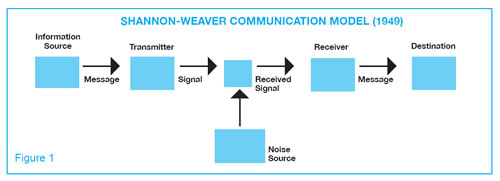
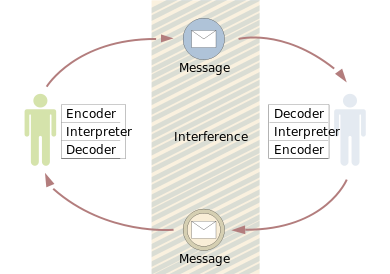
Now, let’s cover two models and compare them. You can think of models as visual definitions.


Shannon-Weaver Model


Schramm Model


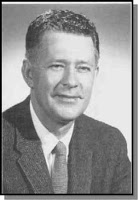
Note on Wilbur Schramm


"Wilbur Schramm was the founder of communication study.  If his contribution to the field could somehow be removed, there would not be a field of communication study.  It is doubtful that anyone else could have founded the field" (p. 476).

Whether we accept this fully or to a lesser degree, we still owe Schramm some respect and appreciation for his contributions.  He is a key part of our intellectual family.  The founding father?


Share this post with others. See the Twitter, Facebook and other buttons below.
Please follow, add, friend or subscribe to help support this blog.
See more about me at my web site WilliamHartPhD.com.


Thursday, March 23, 2017

GlobalMedia: Development Communication (cont'd): Entertainment Education (W11-P1) Sp17


The idea of presenting a development message within a fictional program is the type of development communication that is called entertainment education.  The World Bank is a multinational organization that uses entertainment education in their work.  See the video below for examples and background information.


Below is another example of entertainment education.  Tim Reid, noted Norfolk State University alumnus and actor/director/producer, and NSU students (Maryna Kariuk and Shimira Cole) were involved in the making of "Hear My Son".  How exactly is this an example of entertainment education?


Hear My Son from Legacy Media Institute on Vimeo.


Interested in learning more about entertainment education, I'd recommend starting with a book edited by Arvind Singhal, Michael J. Cody, Everett M. Rogers and Miguel Sabido called
Entertainment-Education and Social Change: History, Research, and Practice (Routledge Communication Series)


Share this post with others. See the Twitter, Facebook and other buttons below.
Please follow, add, friend or subscribe to help support this blog.
See more about me at my web site WilliamHartPhD.com.


Thursday, March 2, 2017

GlobalMedia: Development Communication: Diffusion of Innovations (W8-P3) Sp17


Previously, development communication was defined as: "the use of communication technology and principles to aid in the development of a society."

Below is an example of a set of communication principles (or a theory) that has a long history of being applied to aid in development.

---

Everett Rogers
Diffusion of Innovations as an Approach to Development.

Everett Rogers wrote Diffusion of Innovations (1962, 1971, 1983, 1995, 2003).

What is an innovation?
  • An idea, object or practice...
  • Perceived as new...
  • By an individual or organization.


What is the diffusion of innovations?
  • An innovation ...
  • Communicated via channels...
  • Over time...
  • Among the members of a social system.


CHARACTERISTICS OF INNOVATIONS
The characteristics (or attributes) of innovations, as perceived by individuals, help to explain their rate of adoption.  Characteristics of innovations are one important set of variables influencing the rate of adoption.

  1. Relative Advantage
    1. Relative advantage is the degree to which an innovation is perceived as being better than the idea it supersedes
    2. e.g. economic profitability, decrease in discomfort, savings in time and effort, immediacy of reward
  2. Compatibility
    1. Compatibility is the degree to which an innovation is perceived as consistent with existing values, past experiences, and needs of potential adopters.
    2. Example: rap music and the role of MTV in making rap accessible and acceptable for all youth (Black & White).
  3. Complexity
    1. Complexity is the degree to which an innovation is perceived as relatively difficult to understand and use.
    2. Example: DOS vs. Windows
  4. Trialability
    1. Trialability is the degree to which an innovation may be experimented with on a limited basis.
  5. Observability
    1. Observability is the degree to which the results of an innovation are visible to others.
    2. Examples: solar panels & DBS, PrimeStar, DISH and the like

Given the above, how could diffusion of innovations (a communication theory) be used in development work?   How could diffusion of innovations be used to fight a health issue in a community or developing nation?  How could you use the characteristics of innovations to better fight a health issue in a community or developing nation?


Share this post with others. See the Twitter, Facebook and other buttons below.
Please follow, add, friend or subscribe to help support this blog.
See more about me at my web site WilliamHartPhD.com.


GlobalMedia: Development Communication: A History (Marshall Plan, etc.) (W8-P2) Sp17


"Uncle" Wilbur
A Historical Sketch of Development Communication

First a quick overview...

Dr. Wilbur Schramm
Founder of the social science study of communication (late 40s-50s) and key founder of development communication.
  • 1950s: 
    • Post-WWII & Cold War -- Newly independent nations struggling (the “terrible ascent”)
  • 1960s: 
    • Schramm: How to help them? His answer: w/ mass media - “the great multiplier.” Need to bring in mass media technology.
  • 1970s: 
    • Many countries implemented mass media programs.
  • 1980s: 
    • 1) Concern with “Neo-imperialism”
    • Hamid Mowlana
    • 2) Mowlana: users of mass media blind to the importance of traditional forms of communication in some societies/cultures. “Technology vs. Tradition” (Mowlana)
  • 1990s: 
    • Use of mass media to aid in development, but w/ caution regarding culture. Example: AIDS/HIV education in radio program in Tanzania & TV soap opera in China (Rogers)
  • 2000s: 
    • New issues and use of new communication technologies
(Sources: based on Mowlana, 1996, 1997, Stevenson, 1993, Rogers, 1997)


Now back to the 40s and 50s...

Coming out of World War II the U.S. was in good shape (economically, politically, etc.), but many of the nations of Europe faced problems.

To get a sense of the problem faces see CNN Perspectives Presents Cold War. (See also background info on this CNN series.)

Some of the series is available online.  As you watch the clips below pay close attention to the Marshall Plan.  What relationship does it have to development communication?

U.S. provided $$ and expertise in "reconstructing" Europe. U.S. foreign policy (lead by Truman) changed isolationism to “active leadership.” The U.S. offered the Marshall Plan* (more on Marshall Plan from CNN).

See the clips 0:00 to 1:50 and from about 20:30 to 28:00


Why should the U.S. help European countries after WWII?

  1. humanitarian concerns (White Man’s Burden again?)
  2. stop spread of communism!

Truman Doctrine: to defend freedom & democracy worldwide.

Edward T. Hall
After reconstructing Europe Truman offered the world “the benefits of our [U.S.] scientific advances and industrial progress… for the improvement and growth of underdeveloped areas.”

This was called the Point Four Program. (Director, Edward Hall)
One of the key tasks taken on by Hall was teaching U.S. diplomats intercultural communication skills. The formal study of intercultural communication can be traced back to Hall and this program.  Hall has been called the founding father of intercultural communication study.

The government lacked knowledge on how to develop nations, so they turned to academia. Development theories were developed in economics, psychology, political science, sociology, and communication. For example, Wilbur Schramm offered his theory/approach to development.  By the mid-70s, development programs were recognized an ineffective. Schramm, Rogers and others recognized the faults.

Everett M. Rogers
What was wrong? According to Rogers (1976)
The old way of doing development programs had the following errors:

  1. They assume infinite economic growth, ignore problems like population growth, pollution, etc., and do not take into account the "quality of life."
  2. They emphasize technology and capital rather than labor, thus encouraging economic dependence on advanced countries. Low priority to agriculture.
  3. It blames the developing countries for their failings, ignoring external factors beyond their control.
  4. It takes an ethnocentric (Western) bias by emphasizing the modernization of "traditional" individuals.
(Sources: International Encyclopedia of Communication, "Development Communication," 1989; "Marshall Plan" Britannica Online.].).

NOTE: Three of the scholars mentioned above (Mowlana, Hall and Rogers) were professors of mine.  They are part of my intellectual family.  And, now you are part of this intellectual family too.  As for Schramm, it actually turns out that I might be biologically related to "Uncle Wilbur."  Born in the same small city, graduated from same undergrad college, same family tree roots, etc.


Share this post with others. See the Twitter, Facebook and other buttons below.
Please follow, add, friend or subscribe to help support this blog.
See more about me at my web site WilliamHartPhD.com.


Thursday, February 16, 2017

GlobalMedia: Intercultural Com: "The Ugly American" (W6-P6) [VID] Sp17


What are the counterproductive attitudes that Americans can have about people from other countries?*
  • "Foreigners coming to live in the U.S. should adapt American ways."
  • "Asians do many things backwards."
  • "Much of the world’s population remains underdeveloped because they don’t take the initiative to develop themselves."
  • "Americans have been very generous in teaching other people how to do things the right way."
  • "English should be accepted as the universal language."

Q: Central theme in the counterproductive attitudes expressed above?
A: Ethnocentrism: a belief that your group's ways are the best ways.

Imagine a person working in development communication who heads into a development project abroad with the above attitudes. How would things work out?


The phrase "ugly American" comes, in part, from a 1958 novel about an American who travels abroad and expresses an ethnocentric attitude.  The novel was made into a 1963 film staring Marlon Brando.


Now to another film.  How does Disney's Pocahontas fit into this discussion?

Do you spot the ethnocentric attitude from John Smith in this Pocahontas clip?
(If the video clip does not work, then the Disney's Pocahontas film can be found on sites like Netflix.  If you find the full film see the segment from about 35:45 to about 40:00.)


Given the similarity between Pocahontas and Avatar (see below), then you might explore the "ugly Earthling" aspects of Avatar.  Can you think of other related films?


* Of course, this could go the other way. People in other countries can have ethnocentric views toward the U.S. --  The ugly _____.


Share this post with others. See the Twitter, Facebook and other buttons below.
Please follow, add, friend or subscribe to help support this blog.
See more about me at my web site WilliamHartPhD.com.


GlobalMedia: Intercultural Com: Cultural Values (W6-P4) Sp17


What are values?

"Social principles, goals, or standards accepted by persons in a culture. They are learned by contacts with the family, teachers, and religious leaders. The media also may influence one’s value system."

Or what are the things that a culture finds valuable, important.
Money?   Family?


What are your values?  Where did you get them?  Are there some values more important than others?  What is your most important value?  Interacted with somebody who has a different set of values?


Share this post with others. See the Twitter, Facebook and other buttons below.
Please follow, add, friend or subscribe to help support this blog.
See more about me at my web site WilliamHartPhD.com.


GlobalMedia: Intercultural Com: A Model of Intercultural Com (W6-P3) Sp17


Read the diagram above.  The model of intercultural communication (ICC) begins with two people from different cultures interacting or communicating.  What is the rest of the process?  What are the parts of the process of intercultural communication?  In this model, the goal is effective intercultural communication, but what are some of the barriers that can cause problems?  Prejudice?  Stereotypes?  Discrimination?  Differences in language?  Others?


Share this post with others. See the Twitter, Facebook and other buttons below.
Please follow, add, friend or subscribe to help support this blog.
See more about me at my web site WilliamHartPhD.com.


GlobalMedia: Intercultural Com: Tower of Babel (W6-P1) Sp17


File:Brueghel-tower-of-babel.jpg
The Tower of Babel by Pieter Bruegel the Elder (1563). Image in the public domain.

The image above depicts the Biblical story of how different languages and cultures came to be.


So, what is the story and what does it have to do with intercultural communication?


Share this post with others. See the Twitter, Facebook and other buttons below.
Please follow, add, friend or subscribe to help support this blog.
See more about me at my web site WilliamHartPhD.com.


Thursday, February 2, 2017

GlobalMedia: Music, MTV & Global Media: Global Media, Music & the Future (W4-P5) Sp17


Some of Crother's Emerging Developments especially relevant to music
  • Social Media
    • Social networking will continue to be a platform for the spread of information, products, cultural styles, and political and social change around the world."
    • "The YouTube-ification of entertainment is likely to expand."
  • Fragmegration
    • "Challenges to American movies, music, and television programs will arise for a variety of economic, political, and cultural reasons, leading to new alliances seeking to limit the effects of American popular culture within their communities."
    • "American popular culture may facilitate the emergence of a global culture, at least to a limited extent."
    • "Increased exposure to American popular culture will encourage the development of hybrid forms that have value to local cultures."
  • North-South
    • Cultural integration is more likely within and among components of the Global North* than it is within and among the Global South*, thereby deepening the gap between north and south.


*North–South Divide: a the "broadly considered a socio-economic and political divide. Generally, definitions of the Global North include North America, Western Europe and developed parts of East Asia. The Global South is made up of Africa, Latin America, and developing Asia including the Middle East" (Wikipedia).

OSCEmap 2005.png
"OSCEmap 2005". Licensed under CC BY-SA 3.0 via Wikimedia Commons.


Share this post with others. See the Twitter, Facebook and other buttons below.
Please follow, add, friend or subscribe to help support this blog.
See more about me at my web site WilliamHartPhD.com.


GlobalMedia: Music, MTV & Global Media: Measuring the Spread of American Music (W4-P4) Sp17


So, if American music contains American values and if said music may cause changes in the cultures of other countries, then just how widespread is American music?

How would you measure how widespread?  What evidence would you give?

Ways to Assess the Preeminence of American Music in World Entertainment
  1. "A review of the top-selling albums of all time suggests the dominance of American music, for example. As of November 2011, there were twenty-seven albums that had sold at least fifteen million copies worldwide, and sixteen were the product of undeniably American acts. The Eagles’ Their Greatest Hits is tied with Michael Jackson’s Thriller for the number one selling album of all time, at twenty-nine million sales."
  2. "Similar evidence for American music prominence can be found in considering the individual artists and groups in terms of their certified global record sales. The most successful musical act of all time, for example, is not American: it is The Beatles, with 177 million album sales in their history."  However most other top selling artists and groups are American.
  3. "The dominance of American rock, country, and hip-hop is perhaps most evident in the direct linkage of music and television created in 1981 with the formation of the cable network MTV, Music Television. In their endless search for venues... An idea this profitable was sure to spread, and spread it did. Just ten years after its creation, MTV was available in 201 million households in seventy-seven countries ranging from Australia to Brazil to Hong Kong. MTV Europe grew from 3 million households in 1988 to 14 million in 1991 and then 37 million in 1992."

How else would you measure the spread of American music?  What evidence would you give?

International Billboard Charts (limited access)
Spotify Charts


Share this post with others. See the Twitter, Facebook and other buttons below.
Please follow, add, friend or subscribe to help support this blog.
See more about me at my web site WilliamHartPhD.com.


GlobalMedia: Music, MTV & Global Media: American Culture in Country, Rock and Hip-Hop (W4-P3) Sp17


According to Crothers the first step in understanding the effects that American popular culture artifacts may have on other cultures is to identify the American cultural values in the artifacts.

What is the culture hidden in the popular music genres. Crothers covers three prominent American music genres: country, rock and hip-hop and also identifies the cultural values in the music.

Do you agree with Crothers' analysis?


Country Music


"Country has long prided itself on reflecting the lives of real people, particularly working-class, rural Americans. Country’s topics have chronicled the struggles of the individual as he or she tries to make it in a dead-end job, in a difficult marriage, or even through addiction to drugs or alcohol."

"Additionally, country regularly sings the virtues of hard work, traditional love, the glory of a loving family, and unabashed patriotism. The real America, country seems to say, is the America in which people struggle but take responsibility for their personal fates. Americans fight for their honor and dignity as ends all their own."


Rock Music


"At its heart were energy, excitement, and rebellion. Rock musicians tapped into their fans’ adolescent dreams".

"Rock, after all, expresses rebellion, energy, and individualism—as do teenagers. The causality seemed self-evident: children who were once compliant and sweet."


Hip-Hop Music


"If country celebrated traditional values and patriotism, and rock and roll energized the ambitions of a generation to change the world, hip-hop expressed the anger and frustration of a long-repressed community that had many grievances in what it described as a racist America."

"Hip-hop also reflected a raw form of street sexuality in which suggestive language was common. Other performers offered explicit accounts of their sexual desires and fantasies."


Do you agree with Crothers' analysis?  What would you change or add?  Support your argument.


So, if we can agree that "hidden" in the music are certain American cultural values, then so what?  Why is that important?  What's this have to do with the effects thing discussed earlier?


Share this post with others. See the Twitter, Facebook and other buttons below.
Please follow, add, friend or subscribe to help support this blog.
See more about me at my web site WilliamHartPhD.com.


GlobalMedia: Music, MTV & Global Media: Crothers' Key Concepts (W4-P2) Sp17


Crother's Key Concepts

In Crothers' 2012 book, Globalization and American Popular Culture, the author explores the "ways that American movies, music, and television programs shape and are shaped by contemporary globalization."


It is important for Americans to study this topic because "it is through these artifacts (and many others) that the rest of the world sees American values and lifestyles."  Or put more poetically: "[W]hat people are likely to see of America and what they are likely to know about America will be filtered through the lens of American popular culture."

So, it is through these artifacts that the world understands American culture.  However, this is not the only reason it is important to study this topic.

More importantly, what effect do these American cultural artifacts have on the cultures other countries?

In the book Crothers defines culture as "the root values, ideas, assumptions, behaviors, and attitudes that members of particular communities generally share in an unexamined, automatic way."

"Among the many things that cultures teach their members are normative standards of evaluation—of dress, food, behavior, attitudes, ideas, and many other things."


---

Early on in the book Crothers covers some additional key concepts: popular culture, globalization and fragmegration.

Crothers discusses popular culture, but does not give a succinct definition, so we go to another source for our definition here:

pop[ular] culture:  "commercial culture based on popular taste: fashion, music, and the iconography of pop culture offered the perfect medium for profit (Oxford Dictionary).

With this given definition, how would you describe American popular culture?
Make special note of music.


---

Similarly, for a succinct definition of globablization, we will need to head to an outside source.

globalization: "the process by which businesses or other organizations develop international influence or start operating on an international scale" (Oxford Dictionary).

"A combination of economic, political, and cultural factors promote globalization by
(1) making it possible to create new and increased ties among people, social networks, and ideas that span traditional nation-state boundaries;
(2) linking people in new ways, making it possible for work or travel or shopping or other activities to take place twenty-four hours a day around the world;
(3) advancing the speed of communication and the expectation of instantaneous contact, in effect making global events and issues local ones as well; and
(4) shaping and reshaping individuals’ ideas and identities as they are exposed to this increasingly complex world" (Crothers, 2012).

---
Crothers draws on James Rosenau's work.

Rosenau coined the term fragmegration "to describe the integration-fragmentation dynamic that shapes globalization today. Fragmentation and integration occur at the same time, profoundly shaping the dynamics of globalization."

At the same time the process of globalization brings the world together and pushes it apart.
Really?  How?  Explain.

How does music fit in here?


Share this post with others. See the Twitter, Facebook and other buttons below.
Please follow, add, friend or subscribe to help support this blog.
See more about me at my web site WilliamHartPhD.com.


GlobalMedia: Music, MTV & Global Media: Mr. Worldwide (W4-P1) Sp17


Pitbull - International Love ft. Chris Brown


"I've been to countries and cities I can't pronounce
And the places on the globe I didn't know existed
In Romania, she pulled me to the side and told me
'Pit, you can have me and my sister'

In Lebanon, yeah, the women are bomb
And in Greece, you've guessed it, the women are sweet
Spinned [Been?] all around the world but I ain't gon' lie
There's nothing like Miami's heat"

Just how worldly is Mr. Worldwide?   Planet Pit World Tour
Just how international was International Love?  The song

How widespread is American music in other countries around the world?


Would you consider Pitbull's music American music?

Share this post with others. See the Twitter, Facebook and other buttons below.
Please follow, add, friend or subscribe to help support this blog.
See more about me at my web site WilliamHartPhD.com.


Thursday, January 26, 2017

GlobalMedia: Media Imperialism & the Mindset of "The Burden" (W3-P4) Sp17


Media Imperialism (Anglo-American Dominance)

Imperialism: “the extension or imposition of power, authority, or influence.” (Merriam-Webster Dictionary Online)

Imperialism is justified under “the White Man’s Burden” views. (See 1899 poem by Rudyard Kipling entitled “White Man’s Burden”)

Part of Poem:

"Take up the White Man's burden‑‑
        Send forth the best ye breed‑‑
Go, bind your sons to exile
        To serve your captives' need;
To wait, in heavy harness,
       On fluttered folk and wild‑‑
Your new‑caught sullen peoples,
       Half devil and half child."

This is an example of the imperialistic mindset.

This cartoon from 1903 is a follow-up to the poem and the imperialistic, racist mindset.


To where is the "native" being taken?  For what purpose?

And now...
Media Imperialism: “the imbalance and inequality in flow of mass media materials between developed and developing countries, and its subsequent effect on the developing country’s society and culture”(Araby in Frederick,1994).

Can you develop another definition related more to the definition of imperialism above?

Western (American) Media Imperialism.
Q: What American values can be found in its media products?
A: Individualism, materialism, adventurism, etc.

Effects of Media Imperialism?


See below the relevant quote William Loren Katz wrote in his book "The Black West: A Documentary and Pictorial History of the African American Role in the Westward Expansion of the United States."

"The 1890s, which opened with the closing of the [U.S. western] frontier, closed with the beginning of American imperialist expansion. From Puerto Rico in the Caribbean to the Philippines in the Pacific, industrialists and bankers found a new frontier brimming with opportunity. To justify the control of darker peoples abroad, white supremacy arguments again flooded the land. White racism at home or abroad employed the same rhetoric and wielded the same weapons" (Katz, 1996, p. 321).


Share this post with others. See the Twitter, Facebook and other buttons below.
Please follow, add, friend or subscribe to help support this blog.
See more about me at my web site WilliamHartPhD.com.