Showing posts with label Learning from the Past. Show all posts

Wednesday, September 14, 2016

MediaTech: Innovation Adoption & Development: Winston's Model (W4-P3) Fa16


In his book, Media Technology and Society: A History From the Telegraph to the Internet, Brian Winston describes his model of technological development and diffusion.

Let's focus on the development of an early communication technology, the telegraph.


Recall...

According to Winston's model a new technology starts (1) as an idea based on science and then (2) develops into early prototypes. As a technology develops it faces some social pressures ((3) does society see a need for it and (4) will powerful competitors or the government attempt to repress the technology?). The technology will then (5) diffuse through a society and may (6) spin-off related technologies.

The same process applies to the telegraph.  Did you see the process in the video clip above?


Let's highlight certain parts of this process.


See the Winston process in the Empire of the Air?


Source: Media Technology and Society: A History From the Telegraph to the Internet


Share this post with others. See the Twitter, Facebook and other buttons below.
Please follow, add, friend or subscribe to help support this blog.
See more about me at my web site WilliamHartPhD.com.


MediaTech: Innovation Adoption & Development: Rogers Development (W4-P2) Fa16


Note: Don't confuse this with the adoption decision process.

How does the innovation development process work?
How does an innovation come to exist, diffuse and influence society?
  1. Recognizing a Problem or Need
  2. Basic and Applied Research
  3. Development
  4. Commercialization
  5. Diffusion and Adoption
  6. Consequences

Did you see this process in the Empire of the Air?


1. Recognizing a Problem or Need

  • Was there a need for radio?   Did it solve a problem?


2. Basic and Applied Research
  • Basic research: gain basic scientific knowledge related to the problem/need
  • Applied research: using scientific knowledge to specifically solve the problem.
  • What did the early inventors of radio need to know?  What was there research?

3. Development
  • How did radio develop?  What is the story?
  • Role of skunk works in organizations?   (Oxford Dictionary definition
  • Technology transfer: two-way exchange of tech
    • Technology transfer: “two or more parties must participate in a series of communication exchanges as they seek to establish a mutual understanding about the meaning of the technology” (Rogers)
  • Example
    • VCR invented by Ampex, a U.S. company in late 50s
    • Sold big VCRs to television stations
    • Home use: They said “we’re not in that market”
    • Sold rights to Sony
    • And now you know the rest of the story

4. Commercialization
  • Commercialization: “the production, manufacturing, packaging, marketing, and distribution of a product that embodies the innovation” (Rogers).
  • Did they talk of the commercialization of radio in the clip?  In the reading?
  • Technology cluster: “consists of one or more distinguishable elements of technology that are perceived as being interrelated closely.” (Rogers)
    • e.g., computer and mouse
    • e.g., mp3 player and __________
  • What are the elements of the radio cluster that would also diffuse?

5. Diffusion and Adoption

  • How did radio diffusion?  Did it diffusion widely?


6. Consequences
  • What effects did radio have on society?
  • More on consequences later.  We'll return to that important topic later.

Did you see this process in the Empire of the Air?


Besides radio, do you have some understanding of this process as it relates to some other media technology? What about some Apple devices?  Did the recent Jobs movie show any of this process?


Source: Diffusion of Innovations, 4th ed.


Share this post with others. See the Twitter, Facebook and other buttons below.
Please follow, add, friend or subscribe to help support this blog.
See more about me at my web site WilliamHartPhD.com.


MediaTech: Innovation Adoption & Development: Rogers Decision (W4-P1) Fa16


In his book, Rogers explains the process people go through when adopting an innovation, more specifically the decision process.

See below.


    Source: Diffusion of Innovations, 4th ed.


    We can boil the decision process down to just five steps.


    Rogers’ model for the adoption decision process

    What are the steps in the adoption decision process?
    1. "Knowledge - learning about the existence and function of the innovation
    2. Persuasion - becoming convinced of the value of the innovation
    3. Decision - committing to the adoption of the innovation
    4. Implementation - putting it to use
    5. Confirmation - the ultimate acceptance (or rejection) of the innovation”

    Think carefully about the most recent new tech you bought, I mean adopted.  Did you go through this process?  Review the process above and think about it.

    What was the tech?  How did you learn about the new tech?  How were you persuaded to get it?  What about the rest of the process?


    Share this post with others. See the Twitter, Facebook and other buttons below.
    Please follow, add, friend or subscribe to help support this blog.
    See more about me at my web site WilliamHartPhD.com.


    Wednesday, September 7, 2016

    MediaTech: The Invention of Radio - Ken Burns' "Empire of the Air" (W3-P6) Fa16


    Now, a great way of using the previously discussed media tech theories is to apply them to the development of a past media technology, for example radio.  Filmmaker, Ken Burns, told the story of radio in his documentary "Empire of the Air."  Notice the story is not as much about the technology as it is about the people (the innovators).  Media tech is people too.

    The documentary is available...
    on Amazon (Empire of the Air: The Men Who Made Radio) and on Netflix (instant streaming).

    The companion book to the film is also available (Empire of the Air: The Men Who Made Radio)

    Did you watch it?

    How did the theories previously discussed help to understand the development of radio?

    In the documentary, Burns highlights the story of Lee de Forest, for example. How does his story compare to modern-day media tech innovators like Steve Jobs?  Is there a common story for media tech innovators?

    Here is a short YouTube video on de Forest's audion.


    Share this post with others. See the Twitter, Facebook and other buttons below.
    Please follow, add, friend or subscribe to help support this blog.
    See more about me at my web site WilliamHartPhD.com.


    MediaTech: Winston's Model and the History of Media Tech (W3-P5) Fa16


    Winston's model explains how media technologies develop from ideas to diffusion.  The story begins at the bottom left of the figure and ends at the upper right of the figure.


    According to Winston's model a new technology starts (1) as an idea based on science and then (2) develops into early prototypes.  As a technology develops it faces some social pressures ((3) does society see a need for it and (4) will powerful competitors or the government attempt to repress the technology?).  The technology will then (5) diffuse through a society and may (6) spin-off related technologies.

    How does this theory help us understand how media technologies develop?  Does it help us understand the future of media technologies?


    Source: Media Technology and Society: A History From the Telegrapph to the Internet


    Share this post with others. See the Twitter, Facebook and other buttons below.
    Please follow, add, friend or subscribe to help support this blog.
    See more about me at my web site WilliamHartPhD.com.


    MediaTech: Diffusion of Innovations and the History of Media Tech (W3-P4) Fa16


    Rogers' Diffusion of Innovations
    “the process by which an innovation is communicated through certain channels over time among the members of a social system.”(Rogers).


    The graph above shows how people in a society over time adopt an innovation.

    At first nobody had a TV in the U.S., but over time...


    How does this theory help us understand how media technologies develop?  Does it help us understand the future of media technologies?


    Source: Diffusion of Innovations, 5th Edition


    Share this post with others. See the Twitter, Facebook and other buttons below.
    Please follow, add, friend or subscribe to help support this blog.
    See more about me at my web site WilliamHartPhD.com.


    MediaTech: SCOT, Tech Determinism and the History of Media Tech (W3-P3) Fa16


    Ev Rogers and I wrote a book chapter which, in part, explained the Social Construction of Technology and Technological Determinism theories. We also tied the two theories together.


    The chapter appeared in The Changing Conversation in America edited by Eadie and Nelson.


    Ev and I wrote about Social Construction of Technology (SCOT) this way:


    We said of Technological Determinism:


    At the end of the chapter we included a diagram.


    There is something missing in the figure.  It was included in the paper we submitted, but left out in the printing.  What is missing?

    How do these theories help us understand how media technologies develop?  Do they help us understand the future of media technologies?


    Share this post with others. See the Twitter, Facebook and other buttons below.
    Please follow, add, friend or subscribe to help support this blog.
    See more about me at my web site WilliamHartPhD.com.


    MediaTech: How Do You Learn from the Past to Help Understand the Future? (W3-P2) Fa16


    A theory is an explanation for how something works, how something happens.
    There are helpful theories that can be used to explain how media technologies have developed (i.e., tell their history). How they came to be.  How they spread in a society.
    • Social Construction of Technology
    • Technological Determinism
    • Diffusion of Innovations
    • Winston’s Model Communication Technology Development
    These theories can be used to better understand the development of past media technologies (e.g., radio).  They explain how and why certain things happened in a history of a technology.  Let's preview each theory and see how it fits into helping us tell the history of media technologies.


    Share this post with others. See the Twitter, Facebook and other buttons below.
    Please follow, add, friend or subscribe to help support this blog.
    See more about me at my web site WilliamHartPhD.com.


    MediaTech: Why Study the History of Media Tech? (W3-P1) Fa16


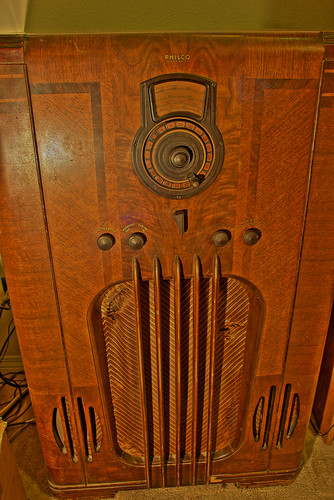
    Philco High-Fidelity
    Source: Flickr (CC - KN6KS) 
    Why Study the History of Media Tech?

    • To satisfy our curiosity.
    • To gain an appreciation for the work done and the progress made.
    • To show a little respect for those who came before us.
    • To gain a sense of identity w/ community.
    • To learn from the past to help understand the future.


    Source: Based on Hart, 1999.


    Share this post with others. See the Twitter, Facebook and other buttons below.
    Please follow, add, friend or subscribe to help support this blog.
    See more about me at my web site WilliamHartPhD.com.


    Tuesday, November 24, 2015

    HistMedia: SCOT, Tech Determinism and the History of Media Tech (W14-P1) Fa15

    Ev Rogers and I wrote a book chapter which, in part, explained the Social Construction of Technology and Technological Determinism theories.  We also tied the two theories together.


    The chapter appeared in The Changing Conversation in America edited by Eadie and Nelson.


    Ev and I wrote about Social Construction of Technology (SCOT) this way:


    We said of Technological Determinism:


    At the end of the chapter we included a diagram.


    NOTE: There is something missing in the figure.  It was included in the paper we submitted, but left out in the printing.  What is missing?

    What do we mean by "complete picture" (see caption of the diagram)?


    Using SCOT and TD to Understand the Historical Development of Technology

    How do these theories help us understand how media technologies develop?

    Like the ideas of Kuhn and Burke (presented previously), technological determinism and social construction of technology are theoretical constructs that help us understand the development (or history) of technologies.

    How do these theories help us better understand the history of past media technology?  Books? Radio?  TV?   How do they help us understand the stories of Gutenberg, Edison, Woods, De Forest, Armstrong and Farnsworth?  For example, how could we use the idea of  social construction of technology to explain (or understand) the story of Granville Woods?

    How do they help us better understand the development of more recent media technologies (computers, the PC, the Internet, etc.)?   How do they help us understand the stories of Bill Gates and Steve Jobs?  Mark Zuckerberg?


    Share this post with others. See the Twitter, Facebook and other buttons below.
    Please follow, add, friend or subscribe to help support this blog.
    See more about me at my web site WilliamHartPhD.com.


    Wednesday, September 16, 2015

    MediaTech: Innovation Adoption & Development: Winston's Model (W4-P3) Fa15


    In his book, Media Technology and Society: A History From the Telegraph to the Internet, Brian Winston describes his model of technological development and diffusion.

    Let's focus on the development of an early communication technology, the telegraph.


    Recall...

    According to Winston's model a new technology starts (1) as an idea based on science and then (2) develops into early prototypes. As a technology develops it faces some social pressures ((3) does society see a need for it and (4) will powerful competitors or the government attempt to repress the technology?). The technology will then (5) diffuse through a society and may (6) spin-off related technologies.

    The same process applies to the telegraph.  Did you see the process in the video clip above?


    Let's highlight certain parts of this process.


    See the Winston process in the Empire of the Air?


    Source: Media Technology and Society: A History From the Telegraph to the Internet


    Share this post with others. See the Twitter, Facebook and other buttons below.
    Please follow, add, friend or subscribe to help support this blog.
    See more about me at my web site WilliamHartPhD.com.


    MediaTech: Innovation Adoption & Development: Rogers Development (W4-P2) Fa15

    Note: Don't confuse this with the adoption decision process.

    How does the innovation development process work?
    How does an innovation come to exist, diffuse and influence society?
    1. Recognizing a Problem or Need
    2. Basic and Applied Research
    3. Development
    4. Commercialization
    5. Diffusion and Adoption
    6. Consequences

    Did you see this process in the Empire of the Air?


    1. Recognizing a Problem or Need

    • Was there a need for radio?   Did it solve a problem?


    2. Basic and Applied Research
    • Basic research: gain basic scientific knowledge related to the problem/need
    • Applied research: using scientific knowledge to specifically solve the problem.
    • What did the early inventors of radio need to know?  What was there research?

    3. Development
    • How did radio develop?  What is the story?
    • Role of skunk works in organizations?   (Oxford Dictionary definition
    • Technology transfer: two-way exchange of tech
      • Technology transfer: “two or more parties must participate in a series of communication exchanges as they seek to establish a mutual understanding about the meaning of the technology” (Rogers)
    • Example
      • VCR invented by Ampex, a U.S. company in late 50s
      • Sold big VCRs to television stations
      • Home use: They said “we’re not in that market”
      • Sold rights to Sony
      • And now you know the rest of the story

    4. Commercialization
    • Commercialization: “the production, manufacturing, packaging, marketing, and distribution of a product that embodies the innovation” (Rogers).
    • Did they talk of the commercialization of radio in the clip?  In the reading?
    • Technology cluster: “consists of one or more distinguishable elements of technology that are perceived as being interrelated closely.” (Rogers)
      • e.g., computer and mouse
      • e.g., mp3 player and __________
    • What are the elements of the radio cluster that would also diffuse?

    5. Diffusion and Adoption

    • How did radio diffusion?  Did it diffusion widely?


    6. Consequences
    • What effects did radio have on society?
    • More on consequences later.  We'll return to that important topic later.

    Did you see this process in the Empire of the Air?


    Besides radio, do you have some understanding of this process as it relates to some other media technology? What about some Apple devices?  Did the recent Jobs movie show any of this process?


    Source: Diffusion of Innovations, 4th ed.


    Share this post with others. See the Twitter, Facebook and other buttons below.
    Please follow, add, friend or subscribe to help support this blog.
    See more about me at my web site WilliamHartPhD.com.


    MediaTech: Innovation Adoption & Development: Rogers Decision (W4-P1) Fa15


    In his book, Rogers explains the process people go through when adopting an innovation, more specifically the decision process.

    See below.


      Source: Diffusion of Innovations, 4th ed.


      We can boil the decision process down to just five steps.


      Rogers’ model for the adoption decision process

      What are the steps in the adoption decision process?
      1. "Knowledge - learning about the existence and function of the innovation
      2. Persuasion - becoming convinced of the value of the innovation
      3. Decision - committing to the adoption of the innovation
      4. Implementation - putting it to use
      5. Confirmation - the ultimate acceptance (or rejection) of the innovation”

      Think carefully about the most recent new tech you bought, I mean adopted.  Did you go through this process?  Review the process above and think about it.

      What was the tech?  How did you learn about the new tech?  How were you persuaded to get it?  What about the rest of the process?


      Share this post with others. See the Twitter, Facebook and other buttons below.
      Please follow, add, friend or subscribe to help support this blog.
      See more about me at my web site WilliamHartPhD.com.