Showing posts with label Sp19. Show all posts

Monday, April 22, 2019

MediaResearch: Research Ethics: Tuskegee, Lacks, Milgram & Zimbardo (W15-P3) Sp19


Research ethics are the moral principles and rules that guide a researcher’s actions.

Why talk about research ethics?  What is the need?

To answer that question, let's look at some important research studies from the past.
When watching these clips ask yourself what ethical concerns are raised in doing this research.

1) Tuskegee Syphilis Experiment


2) The Immortal Life of Henrietta Lacks


3 & 4) Milgram's Authority Study & The Stanford Prison Experiment
(Watch from 0:00 to about 6:30)


What are the ethical concerns with the research that Milgram and Zimbardo did? Would you feel comfortable doing this research? Would such research be allowed today?

O.K., now that you have some knowledge of these past experiments do you have an answer to the questions asked earlier?  Why talk about research ethics?  What is the need?


If you are curious, there are some recent films and documentaries about some of these above examples of research misconduct.


Share this post with others. See the Twitter, Facebook and other buttons below.
Please follow, add, friend or subscribe to help support this blog.
See more about me at my web site WilliamHartPhD.com.


Monday, April 15, 2019

MediaResearch: Experiments: What is an Experiment? (W15-P1) Sp19


Play the first minute or so.


When you think of a person doing science, doing research, doing an experiment, what images pop into your mind?

Have film and television shaped your view of science and of experiments?
Hey, I feel a research question coming on.  We could research that.

If it is not the Frankenstein movies that have shaped your image of scientists doing experiments, what movies or television shows have?


An experiment is a research methodology for determining the causal effects of one or more independent variables on a dependent variable, while controlling for all intervening variables.

Experiments are only one of the possible research methodologies you could use to answer your research questions.  Surveys and interviews, for example, are other research methodologies.  There are benefits and drawbacks when considering which research method to use to answer a research question.  What are some benefits that experiments have, but surveys do not?  What is it that experiments can do, that surveys cannot?


What is meant by causal relationship or causal effect?
Or put another way, to be able to say one thing caused another, what would need to be true?

  1. Independent variable comes before the dependent variable.
  2. Independent and dependent variables are meaningfully related.
  3. Changes in DV must be the result of changes in IV (and not anything else)
Watch the clip below.
Correlation vs. Causality: Freakonomics Movie


If you are interested, check out "Correlation and Causality (Khan Academy - YouTube),"
Also, if interested, check out, Correlation or Causation? (Some headlines) or Correlation vs. Causation (NYT)

What is experimental control?
The ability to rule out alternative explanations for the results, controlling for all intervening variables.
You want the IV to be the only thing causing a change in the DV.

In real estate, it is location, location, location.
In experiments, it is control, control, control.

How can experimental control be enhanced?

Compare experimental control in the lab vs. field study.
  • In lab, can more easily manipulate IV.
  • In lab, can randomly assign participants TR and C groups
  • In lab, can control extraneous variables.
  • In field, max external validity

Share this post with others. See the Twitter, Facebook and other buttons below.
Please follow, add, friend or subscribe to help support this blog.
See more about me at my web site WilliamHartPhD.com.


Monday, April 8, 2019

MediaResearch: Experiments: How to Design an Experiment (W15-P2) Sp19


If you wanted to do an experiment, there are three general ways of doing it.


First, a quick question: Based on the name alone, which do you think is the worst form of experimental design?  Why?

Now let's look at each.


The diagrams in these slides explain how to do the different types of experimental designs.
Read these slides from left to right, starting with the random assignment of subjects into the treatment and control groups.  For each design, what are the steps after the random assignment?  That is, how do you do these types of experiments?

So, Post-test ONLY Control is a good design, but there is a problem.  Are we sure that the IV caused a change in the DV?  How would a pre-test help?


Again, this is a good experimental design.  However, there is a potential problem with this too.  Before the pre-test helped.  Now, the pre-test could be a problem.  How's it a problem?


How does the Solomon Four Group design help control for the possible influence of the pre-test?

The above designs are sub-types of full experiments with one independent variable.

However, what if you wanted to have more than on IV in your study?  How would you design an experiment for that?


Now, let's wrap up with a look at the "worst" designs.


If these are the "worst" designs why are we talking about them?  When would you use them?  Better than nothin'?

Which is better a quasi-experimental design or a pre-experimental design?  Why?  What standard are you using to judge whether one is "better" than another?

Speaking of experiments, catch the film reference in the last slide?


Share this post with others. See the Twitter, Facebook and other buttons below.
Please follow, add, friend or subscribe to help support this blog.
See more about me at my web site WilliamHartPhD.com.


MediaResearch: Rhetorical Criticism, "Ohio" & Kent State (W14-P3) [VID] Sp19


Quantitative research papers which use methods like experiments, surveys, and content analysis typically follow a certain format.

Quantitative research paper outline:

  1. Introduction 
  2. Review of literature
  3. Research question(s)/hypothesis
  4. Methods 
  5. Results
  6. Discussion 
  7. References

Rhetorical criticism papers usually take a different approach.

Writing the Rhetorical Criticism Essay (based on S.K. Foss)
  • Introduction
    • Identify artifact (or text to be studied), RQ, Contribution to Theory, Hint of Justification (why is it important to study?)
  • Description of the Artifact
    • Text, Context & Justification
  • Description of the Unit of Analysis
    • What specifically about the text is being studied?
      • Determined by method
  • Report of the Findings of the Analysis
    • Bulk of the essay
    • Organization determined by method
  • Contributing to Answering the Research Question
    • Answer RQ, implications of research results, significance of research results
  • References

In the introduction the author identifies the artifact or text being studied (e.g., a TV commercial) and indicates research questions (RQs) they want to answer (e.g., what words or phrases are used and what role do they play in persuading?).  The author would also indicate how their study adds to previously developed theory and also give some indication of why their study is important.

In the description of the artifact (or text), the author would describe the details about the text (who, what, where, when, etc.).  There is no analysis yet, just the facts about the text. The author would also provide some context for the text.  For example, if an author were analyzing a protest song of the 1960s, the author would want to provide description of what was happening in U.S. society at the time (Vietnam War, assassinations, civil rights, etc.).  The author would elaborate more on why their research, their paper is important.  That is, give justification for why their work should be read.


Lyrics for "Ohio".  If you are interested in some context, see Kent State shootings article.

In the description of the unit of analysis, the author indicates what specific aspect of the text will be studied.  For example, a researcher studying a presidential debate may just focus on the nonverbal aspects of the debate.

The author then spends most of the essay going through their analysis detail by detail from the beginning of the text to the end.

After a detailed analysis, the author closes by offering an answer to the initial research question(s), talks about  what their findings mean for future research and stresses the importance of their research.


If you did some rhetorical criticism on a song or a set of songs that you especially like, what would they be and what do you think you'd find?

What would a rhetorical criticism paper look like for Rihanna's song/video American Oxygen?


Rihanna - American Oxygen (lyrics)


Share this post with others. See the Twitter, Facebook and other buttons below.
Please follow, add, friend or subscribe to help support this blog.
See more about me at my web site WilliamHartPhD.com.



MediaResearch: Textual Analysis (W14-P1) Sp19


We've discussed previously experiments and surveys as research methods.  Here's a third research method, a third way to answer some research questions.

In experiments, you study subjects.  In surveys, you study respondents.  What do you study in textual analysis?

What is textual analysis?

“A research method that uses measurement techniques to classify and evaluate the characteristics of spoken, written, artistic, and electronic documents”(FBFK).

What are the various types of texts analyzed in textual analysis? What is a text?
  • Written --letters, diaries, transcriptions, books, tweets, newspaper articles, etc.
  • Audio -- conversations, lyrics, etc.
  • Visual -- paintings, photographs, architecture, etc.
  • Broadcasts -- film scripts, newscasts, etc.
Texts are the communication media which carry meaning.
Question: What is not a text?


Two important types of textual analysis: rhetorical criticism and content analysis relevant to mass media.
  • Rhetorical Criticism
    • “research involving description, analysis, interpretation, and evaluation of persuasive uses of communication”(FBFK).
    • Note: We are not using the everyday definition of rhetoric.
  • Content Analysis
    • “a research technique for making inferences by systematically identifying specified characteristics in a text”(FBFK).


Some types of rhetorical criticism?

Types…
greek statue head
Photo by Kevin Rawlings.
Used under creative commons.
  • classical rhetoric: focus on oral persuasive acts in the context of government. Aristotelian in focus…ethos, pathos, logos, etc.
    • Credibility, emotional appeal, evidence/reasoning
    • Watch or listen to a famous speech.  How would you judge the rhetoric?  Was it persuasive?  Why?  How?
  • contemporary rhetorical criticism: broader perspective -- includes verbal and nonverbal, face-to-face and mediated, not just politics


What is content analysis and how is it conducted?

Content Analysis
“a research technique for making inferences by systematically identifying specified characteristics in a text”(FBFK).

Steps in using this method…
1. Select text(s)
2. Unit of Analysis (what specifically are you going to study?  Example: specific words, parts of an image, etc.
3. Categories… put into nominal categories
4. Coding … analyze text
5. Summarize


Share this post with others. See the Twitter, Facebook and other buttons below.
Please follow, add, friend or subscribe to help support this blog.
See more about me at my web site WilliamHartPhD.com.
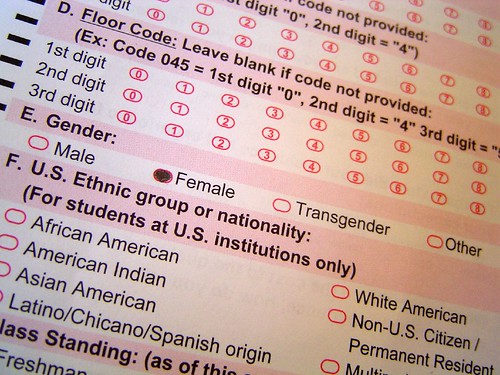


Monday, April 1, 2019

MediaResearch: Surveys: Survey Questions or Items (W13-P2) Sp19


survey question
Photo by Robyn Lee.  Used under creative commons
A survey usually begins with some demographic questions or "items".  Since there are sometimes no questions marks, it would be best to refer to them as items.

Demographics questions/items:
“survey questions that inquire about respondents’ personal characteristics, such as name, age, gender, education”(FBFK).

What demographic questions do you ask?
Only ask demographics that will help you interpret results.  Careful with long surveys.  Why?


Once you are finished with your demographic questions, next you need to ask questions that help you answer your specific research question(s).  You need to ask questions that measure your independent and dependent variables.


What are the general types of questions (or “items”) that can appear on a survey?
  • Knowledge items
  • Attitude items
  • Behavior items
With a survey you are usually measuring what a respondent knows, their likes or dislikes or some aspect of their past behaviors.

If you were writing a survey on social media use, what would be some example questions/items you may put on your survey?  Knowledge?  Attitude?  Behavior?


Do you just have your respondents choose among some predetermined choices or do you leave them some space to respond in whatever they choose?  Put another way, what are close-ended and open-ended survey questions?
  • Closed-ended items
    • Scales-- e.g., Likert scale
    • Use stats to analyze responses to each item and stats to summarize findings
  • Open-ended items
    • Words-- Transcribe responses and use textual analysis to summarize findings


Once you have finished a draft of your survey questions, you'll need to go back and proof-read.  As you are checking spelling and grammar, also keep the following in mind.

What are some tips on wording survey items?
  • Keep items short.
  • Avoid loading or leading questions.
    • “Don’t you think rich professors should be denied a pay raise?”
  • Avoid double-barreled wording.
    • “I support family values and prayer in school.”
  • Avoid double negatives.
    • “Do you never avoid conflict?”


Share this post with others. See the Twitter, Facebook and other buttons below.
Please follow, add, friend or subscribe to help support this blog.
See more about me at my web site WilliamHartPhD.com.


MediaResearch: Surveys: What Are They And How To Do Them. (W13-P1) Sp19


What is a survey? 

A research method in which respondents representing a specific population are asked questions concerning their knowledge, beliefs, attitudes, and behaviors (based on FBFK).

Scholarly use: e.g., correlational design.

Types of applied use: e.g.,  political polls and market research (e.g., Nielsen)

What are the general steps in constructing and giving a survey?

  1. Identify the purpose of the survey
    1. What is the ultimate purpose of a survey in a research study?
  2. Determine who to ask and what to ask.
  3. Write survey
  4. Give survey
    1. Let participants know if there are any risks.
    2. Let participants know their rights.
    3. Right to not participate, to stop participating, etc.
    4. Thank the participants.
  5. Tally results
  6. Report results


What information should be included on a survey (excluding survey questions)?

Title: A Study of Social Media Use by College Students
Who: Dr. Hart, Department of Mass Communications & Journalism
Where:  Norfolk State University, Norfolk, VA
Any Questions: Send to Dr. Hart
Statement of Purpose:
This study seeks your opinion about methods courses for a research study. Your responses are anonymous.  Thank You.
Rights: In addition, if for whatever reason you do not feel comfortable responding to any or all items, please leave it(them) blank.


To be continued...


Share this post with others. See the Twitter, Facebook and other buttons below.
Please follow, add, friend or subscribe to help support this blog.
See more about me at my web site WilliamHartPhD.com.


Saturday, March 30, 2019

MediaResearch: Validity, Reliability, Etc.: Internal and External Validity + Sampling (W12-P2) Sp19


Sampling

Sampling is the process of selecting subjects for a study.  Generally, the subjects are the specific people studied in an experiment or surveyed.  The sample is chosen out of a larger population.

Why sample?  The population you are studying is too large to study, so you have to study just a part of that population (a sample).

What could be some problems with sampling (examples of poor sampling)?  Bias sample?

To reduce the problems of poor sampling, you want to use random sampling when you can.  In random sampling all members of a population have an equal chance of getting into sample.


------------


What are internal and external validity?

With this type validity we are looking at the validity of the overall study, not just the validity of the instruments being used to measure the variables.

You are asking the question: Is it a valid study? Not: Is it a valid instrument?


Internal validity: Are the conclusions to be trusted for the particular study?  Or, are the results valid for the subjects in your sample.   For a visual representation just look the orange circle at the top. The black dots inside the orange circle are the subjects in the sample.


External validity: To whom do the conclusions apply? Generalizability of findings.  The results, can they be generalized to the larger populations   For a visual representation see the orange circle within the pinkish-purple circle.  The orange circle represents the sample and pinkish-purple circle represents the larger population.


Question: Could you have very poor internal validity, but good external validity?

--------

If something goes wrong in a study, who can you blame it on?   That is, if the study is not getting valid results, who can you blame it on? And you can't blame it on the alcohol.  :)

What are some threats to a study’s internal validity?   Or, put another way, where can you put the blame?
  • Threats due to researcher (e.g., influence results).  
  • Threats due to how research is conducted (e.g., inaccurate, inconsistent research, poorly designed survey)
  • Threats due to research subjects
    • Hawthorne effect
    • mortality - losing people from a study (due to death, etc.)
    • maturation - internal change explains behavior.  In studies done over a period of time the subjects may change.
Example: 4 year study of film viewing and levels of prejudice. Subjects= college students.
See any possible threats to internal validity?


What are some threats to a study’s external validity?
  • Research procedures don’t reflect everyday life
    • ecological validity
  • Different finding, same sample
    • replication is important
  • Poor sampling


Any problems with studies done at universities?
Generalizability problem?


Share this post with others. See the Twitter, Facebook and other buttons below.
Please follow, add, friend or subscribe to help support this blog.
See more about me at my web site WilliamHartPhD.com.