This is a blog about my teaching, research and service with some occasional personal comments thrown in. These are my notes on a variety of topics. If you want to follow my blog posts on a specific topic, then see the Table of Contents in the right-hand column. While I try to work in the realm of facts, logic and moral absolutes, if there are any opinions expressed here, they are my own. -WilliamHartPhD
You can learn how something works by following instructions on how to compose or build that something. For example, you could follow a step-by-step set of instructions on how to build a radio from a radio kit.
You can also learn how something works by tearing it apart, figuring out how the pieces work, and then putting it back together. For example, with regards to a radio, see a little of the video below.
What does this have to do with learn how to design a website?
In the image below on the left you see a website as it looks to a person viewing it in their web browser.
On the right you see the code the web designer wrote to tell the browser what to show and how to show it.
Your task is to tear apart the code on the right and figure out how it works. Tear it into pieces and figure out what each piece does. For example, line 1 of the HTML code does what, you think? Do this based on your reading and the code presented below.
Notice that above image is a hypertext image. Click on it. See where it takes you.
Let’s pick up where we left off last time. Let’s learn about the beginnings of the World-Wide Web. This, in turn, will lead us nicely into understanding how to design a website.
The World Wide Web: Crash Course
We’ll first get an introduction to the World-Wide Web and then learn how Berners-Lee fits into the story.
The world wide web “... is not the same thing as the Internet even though people often use the two terms interchangeably. The world wide web runs on top of the Internet in the same way that Skype, Minecraft or Instagram do. The Internet is the underlying plumbing that carries the data for all these different applications and the world wide web is the biggest of them all, a huge distributed application running on millions of servers worldwide accessed using a special program called a web browser.”
Another way to put this: The Internet is the hardware. The web is software. [This is not a definition. It is just a point to make a distinction between the Internet and the Web.]
Hyperlinks: “ text or images that you can click and they jump you to another page.“
Hyperlinks were first conceptualized by Vannevar Bush in 1945, but not implemented on the Internet until 1990.
“Hypertext web pages are the most common type of hypertext document. Today they're retrieved and rendered by web browsers…”
“Each hypertext page needs a unique address on the web this is specified by a Uniform Resource locator or URL…”
The URL for hyperlink above is https://en.wikipedia.org/wiki/Hyperlink. It is the address for where the browser will take you when you click on the hyperlink.
Web browser: “the application on your computer that lets you talk of all of these web servers browsers not only request pages of media but also render the content that's being returned.”
“The first web browser and web server was written by now Sir Tim Berners-Lee … at the time he was working at CERN in Switzerland. To pull this feat off he simultaneously created several of the fundamental web standards we discussed today URLs, HTML and HTTP …”
How much do you know about the development of the Internet and the use of computers as communication tools?
What would a timeline (a list of events) look like for the development of the Internet as a communication tool?
Starting with the late 1960s, what new communication tools appeared on the Internet? Examples: What year did email first appear? What year did blogs appear?
Zuckerman gives a good timeline (or list) in his brief talk.
What would you add to this timeline for more recent years? See the evolution of social media for the rest of the timeline.
What is Communication? “A process by which information is exchanged between individuals through a common system of symbols, signs, or behavior” (Merriam-Webster).
What is Technology? “a design for instrumental action that reduces the uncertainty in the cause-effect relationships involved in achieving a desired outcome”(Rogers). What exactly does that mean? Break it down. Piece by piece. "Tech" in the Dictionary: (Dictionary.com and Merriam-Webster...)
Communication: “a process by which information is exchanged between individuals through a common system of symbols, signs, or behavior” (Merriam-Webster).
Communications: _________
Communications: (a) “a system (as of telephones, or computers) for transmitting or exchanging information.“ (b) “the technology of the transmission of information (as by print or telecommunication)” (Merriam-Webster).
To see the difference, boil each definition down to one word. If you were forced to choose one word, what would it be?
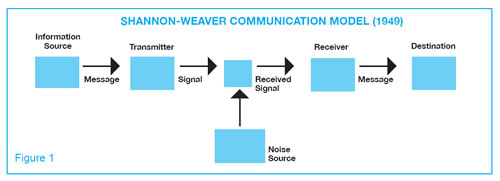
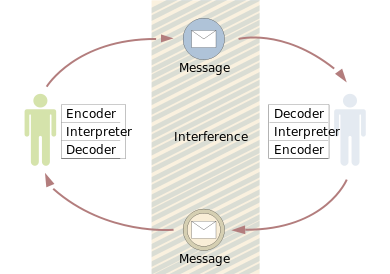
Now, let’s cover two models and compare them. You can think of models as visual definitions.
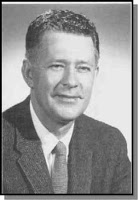
"Wilbur Schramm was the founder of communication study. If his contribution to the field could somehow be removed, there would not be a field of communication study. It is doubtful that anyone else could have founded the field" (p. 476).
Whether we accept this fully or to a lesser degree, we still owe Schramm some respect and appreciation for his contributions. He is a key part of our intellectual family. The founding father?
What does Friedman mean when he says the world is flat?
What are the 3 eras of globalization according to Friedman?
How does this connect with our earlier coverage of globalization?
Is Friedman right? Pankaj Ghemawat: Actually, the world isn't flat.
Key terms: globalization, social media, anti-globalization movement, What is globaloney? How is Ghemawat using the term?
In the past this term referred to an unrealistic foreign policy or global outlook. That fits Ghemawat's usage, but Ghemawat is more specific. How? See 'globaloney' definitions below.
Other than helping individuals to communicate, what grander social role does the Internet play?
For example, the Internet can be used to speak to power and cause social change. In the quote below McPhail notes the role blogs played in challenging power in 2002.
Quote originally taken from 2nd edition of Global Communication.
So, in the United States the Internet can be used to speak to power, but what about in other countries. For the Internet to play a strong role, there would need to be a substantial amount of Internet users in a country. What sort of growth is there for Internet use around the world? According to McPhail (2nd edition),
Quote originally taken from 2nd edition of Global Communication.
The 3rd edition of McPhail has some interesting, updated numbers. What changes do you note?
So, Internet use is certainly on the rise around the world, more so in some countries than in others.
------
On the world stage, the Internet, specifically social media, has been credited with building revolutions in countries and bringing down dictators.
Take for example, protests in the former-Soviet republic of Moldova in 2009. It was called "Moldova’s Twitter Revolution."
More recently though, when one thinks of social media and revolution, one thinks of the Arab Spring. The Arab Spring is "a revolutionary wave of demonstrations and protests occurring in the Arab world that began on Saturday, 18 December 2010."
A Map of Arab Spring Countries
(Image used under the Creative Commons Attribution 3.0, image created by Kwamikagami)
Countries highlighted in black are countries in which the government was overthrown. From left to right the countries are Tunisia, Libya, Egypt and Yemen. Countries highlighted in other colors are countries in which some protesting occurred.
For a sense of the role social media played in Tunisia, see the following news clip.
What exactly did social media do Tunisia? What was the role of social media?
Let's move from a specific example to a broader discussion about the role of social media has played in the Arab Spring. Some say that social media is insignificant and others say social media play a few important roles in revolution. What are both sides of the argument and what are the arguments on both sides. Why, for example, would some say "no, social media doesn't play a role"? To help answer these questions see the Zuckerman video below.
See specifically the presentation from 4:45 to 8:45 and the remainder if interested.
Note: Zuckerman is co-founded international blogging community Global Voices. Check it out of you are interested.
Think of the Internet as the hardware and the World Wide Web as the software that runs on the Internet. The Web is not the hardware. It is collection of interconnected web pages that exist on the Internet.
Now, how did the Internet evolve as a medium of communication from email in the late '60 and early '70s to the web-based communication tools that we have today?
Update to Zuckerman video:
If we can think of the 1990s as the decade of the World Wide Web (web pages, blogs, etc.), we can think of 2000-2010 as the decade of social media. The decade got off to a slow start, but by...
2004: Facebook founded.
2005: YouTube founded. Note the strong social/sharing aspect of YT.
How much do you know about the development of the Internet and the use of computers as communication tools? What do you recall from previous readings, notes and discussion?
Can you trace the development of the Internet using Winston's model?
What would a timeline (a list of events) look like for the development of the Internet as a communication tool? How does the history in video below fit into Winston's model? How, for example, does ARPANET fit into the history and Winston's model?
Starting with the late 1960s, what new communication tools appeared on the Internet? Examples: What year did email first appear? What year did blogs appear?
Zuckerman gives a good timeline (or list) in his brief talk.
What would you add to this timeline for more recent years?
See the evolution of social media for the rest of the timeline.
What does Friedman mean when he says the world is flat?
What are the 3 eras of globalization according to Friedman?
How does this connect with our earlier coverage of globalization?
Is Friedman right? Pankaj Ghemawat: Actually, the world isn't flat.
Key terms: globalization, social media, anti-globalization movement, What is globaloney? How is Ghemawat using the term?
In the past this term referred to an unrealistic foreign policy or global outlook. That fits Ghemawat's usage, but Ghemawat is more specific. How? See 'globaloney' definitions below.
Other than helping individuals to communicate, what grander social role does the Internet play?
For example, the Internet can be used to speak to power and cause social change. In the quote below McPhail notes the role blogs played in challenging power in 2002.
Quote originally taken from 2nd edition of Global Communication.
So, in the United States the Internet can be used to speak to power, but what about in other countries. For the Internet to play a strong role, there would need to be a substantial amount of Internet users in a country. What sort of growth is there for Internet use around the world? According to McPhail (2nd edition),
Quote originally taken from 2nd edition of Global Communication.
The 3rd edition of McPhail has some interesting, updated numbers. What changes do you note?
So, Internet use is certainly on the rise around the world, more so in some countries than in others.
------
On the world stage, the Internet, specifically social media, has been credited with building revolutions in countries and bringing down dictators.
Take for example, protests in the former-Soviet republic of Moldova in 2009. It was called "Moldova’s Twitter Revolution."
More recently though, when one thinks of social media and revolution, one thinks of the Arab Spring. The Arab Spring is "a revolutionary wave of demonstrations and protests occurring in the Arab world that began on Saturday, 18 December 2010."
A Map of Arab Spring Countries
(Image used under the Creative Commons Attribution 3.0, image created by Kwamikagami)
Countries highlighted in black are countries in which the government was overthrown. From left to right the countries are Tunisia, Libya, Egypt and Yemen. Countries highlighted in other colors are countries in which some protesting occurred.
For a sense of the role social media played in Tunisia, see the following news clip.
What exactly did social media do Tunisia? What was the role of social media?
Let's move from a specific example to a broader discussion about the role of social media has played in the Arab Spring. Some say that social media is insignificant and others say social media play a few important roles in revolution. What are both sides of the argument and what are the arguments on both sides. Why, for example, would some say "no, social media doesn't play a role"? To help answer these questions see the Zuckerman video below.
See specifically the presentation from 4:45 to 8:45 and the remainder if interested.
Note: Zuckerman is co-founded international blogging community Global Voices. Check it out of you are interested.
Think of the Internet as the hardware and the World Wide Web as the software that runs on the Internet. The Web is not the hardware. It is collection of interconnected web pages that exist on the Internet.
Now, how did the Internet evolve as a medium of communication from email in the late '60 and early '70s to the web-based communication tools that we have today?
Update to Zuckerman video:
If we can think of the 1990s as the decade of the World Wide Web (web pages, blogs, etc.), we can think of 2000-2010 as the decade of social media. The decade got off to a slow start, but by...
2004: Facebook founded.
2005: YouTube founded. Note the strong social/sharing aspect of YT.
2006: Twitter founded.
etc.
Now, with an explanation of how the Internet works and how it evolved as a communication tool (e.g. social media), let's look how the Internet plays an important role in global communication (see next post).
What would a timeline (a list of events) look like for the development of the Internet as a communication tool? Starting with the late 1960s, what new communication tools appeared on the Internet? Examples: What year did email first appear? What year did blogs appear?
Zuckerman gives a good timeline (or list) in his brief talk.
What would you add to this timeline for more recent years?
How much do you know about the development of the Internet and the use of computers as communication tools? What do you recall from previous readings, notes and discussion?
Can you trace the development of the Internet using Winston's model?




 )
)
 by Ghemawat


 )
)
 by Ghemawat


