Showing posts with label Gordon Parks. Show all posts

Tuesday, March 27, 2018

DigPhotog: Diversity & Digital Photography - Docs on Parks and Maier [VID] (W12-P3) Fa18

This week we look at documentaries about two famous photographers named Vivian Maier and Gordon Parks.


Finding Vivian Maier Official US Theatrical Trailer


Searching for Vivian Maier


Half Past Autumn: The Life and Work of Gordon Parks


Share this post with others. See the Twitter, Facebook and other buttons below.
Please follow, add, friend or subscribe to help support this blog.
See more about me at my web site WilliamHartPhD.com.


Tuesday, January 16, 2018

DigPhotog: Intro to Photography: Critiquing Photos (W2-P2) Sp18


Photography Criticism


When learning how to critique photographs, a good place to start is with Barrett's book, Criticizing Photographs: An Introduction to Understanding Images.


According to Barret:
  • “Criticism is informed discourse about art to increase understanding and appreciation of art.”

Barrett's Approach to Critiquing Photographs
  • Describe what you see - just the facts, be objective
  • Consider the subject matter
  • Consider how form relates to subject matter.
    • Subject matter + form (focus, contrast, etc.) = content.
  • Let interpretation be communal.
    • Who determines the meaning?  Photographer? Critic?
  • Suggest photographer be silent.
  • Interpret the photograph by questions it raises.
  • Avoid hasty judgments - don't jump to judgement
  • Consider presentational environments.
    • Subject + form + context = content
  • Ask how the photograph would be judged.
  • Consider assumptions/theories - why did the photography do what they did?
  • What are the photographer’s theories about the way the world works?
  • Be honest and open.


Barrett's approach can be summarized as the DIET way of critiquing a photograph.
  1. Describe - just the facts, be objective
  2. Interpret - what does it mean?
  3. Evaluate - is it good or bad, rate it, pass careful judgement
  4. Theorize - why did the photographer take the photo? 

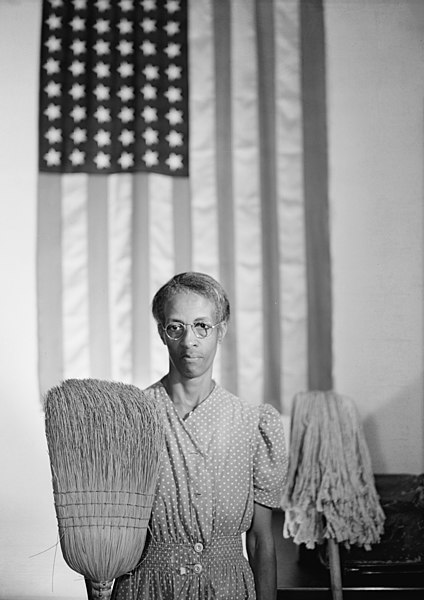
Below is a photo to critique using Barrett's approach.  Start with describe and then...

File:Gordon Parks - American Gothic.jpg
Gordon ParksAmerican Gothic. Portrait of government cleaning
woman Ella Watson. August 1942. (Public domain photo)
   

If you like, you can post below your critique of American Gothic using Barrett's approach.

American Gothic, that sounds familiar.  What was Parks' inspiration for the title of his photo?

For some background on the American Gothic photograph see the clip below starting at about 17:44.


Share this post with others. See the Twitter, Facebook and other buttons below.
Please follow, add, friend or subscribe to help support this blog.
See more about me at my web site WilliamHartPhD.com.


DigPhotog: Intro to Photography: Mentors - Gordon Parks (W2-P1) Sp18


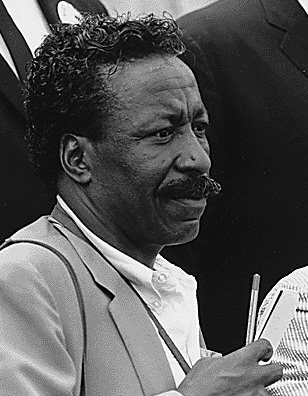
File:Gordon Parks.jpg
Gordon Parks, 1963,
(public domain photo)
One way to begin your study of digital photography is start with a close study of photographs.  Before taking photographs, study photographs.  Be able to critique a photograph first.  Be able to say what is a good photograph and why and then go out and take good photographs based on what you learned in your study of good photographs.

Instead of studying just any photo though, it would be best to start with a study of photographs taken by some of the great photographers.

I'd suggest that you find two or three great photographers that can serve as your mentors.  Start by visiting the Masters of Photography site.  You may find other similar sites online.

I'd encourage you to consider Gordon Parks as one of your mentors. In addition to being a photographer, Parks was an artist, a composer, an author, and a film director (e.g., Shaft).


See the clip below from about 8:57 to about 17:50.  Wait to view the rest along with a future blog post.


If you are interested, read Gordon Parks, a Master of the Camera, Dies at 93 (NY Times)


Share this post with others. See the Twitter, Facebook and other buttons below.
Please follow, add, friend or subscribe to help support this blog.
See more about me at my web site WilliamHartPhD.com.


Wednesday, August 31, 2016

DigPhotog: Intro to Photography: Critiquing Photos (W2-P2) Fa16


Photography Criticism


When learning how to critique photographs, a good place to start is with Barrett's book, Criticizing Photographs: An Introduction to Understanding Images.


According to Barret:
  • “Criticism is informed discourse about art to increase understanding and appreciation of art.”

Barrett's Approach to Critiquing Photographs
  • Describe what you see - just the facts, be objective
  • Consider the subject matter
  • Consider how form relates to subject matter.
    • Subject matter + form (focus, contrast, etc.) = content.
  • Let interpretation be communal.
    • Who determines the meaning?  Photographer? Critic?
  • Suggest photographer be silent.
  • Interpret the photograph by questions it raises.
  • Avoid hasty judgments - don't jump to judgement
  • Consider presentational environments.
    • Subject + form + context = content
  • Ask how the photograph would be judged.
  • Consider assumptions/theories - why did the photography do what they did?
  • What are the photographer’s theories about the way the world works?
  • Be honest and open.


Barrett's approach can be summarized as the DIET way of critiquing a photograph.
  1. Describe - just the facts, be objective
  2. Interpret - what does it mean?
  3. Evaluate - is it good or bad, rate it, pass careful judgement
  4. Theorize - why did the photographer take the photo? 

Below is a photo to critique using Barrett's approach.  Start with describe and then...

File:Gordon Parks - American Gothic.jpg
Gordon ParksAmerican Gothic. Portrait of government cleaning
woman Ella Watson. August 1942. (Public domain photo)
   

If you like, you can post below your critique of American Gothic using Barrett's approach.

American Gothic, that sounds familiar.  What was Parks' inspiration for the title of his photo?

For some background on the American Gothic photograph see the clip below starting at about 19:00.


Share this post with others. See the Twitter, Facebook and other buttons below.
Please follow, add, friend or subscribe to help support this blog.
See more about me at my web site WilliamHartPhD.com.


Monday, August 29, 2016

DigPhotog: Intro to Photography: Mentors - Gordon Parks (W2-P1) Fa16


Gordon Parks.jpg
Gordon Parks, 1963
Public domain photo
One way to begin your study of digital photography is start with a close study of photographs.  Before taking photographs, study photographs.  Be able to critique a photograph first.  Be able to say what is a good photograph and why and then go out and take good photographs based on what you learned in your study of good photographs.

Instead of studying just any photo though, it would be best to start with a study of photographs taken by some of the great photographers.

I'd suggest that you find two or three great photographers that can serve as your mentors.  Start by visiting the Masters of Photography site.  You may find other similar sites online.

I'd encourage you to consider Gordon Parks as one of your mentors. In addition to being a photographer, Parks was an artist, a composer, an author, and a film director (e.g., Shaft).


See the clip below from about 11:58 to about 19:00.  Wait to view the rest along with a future blog post.


If you are interested, read Gordon Parks, a Master of the Camera, Dies at 93 (NY Times)


Share this post with others. See the Twitter, Facebook and other buttons below.
Please follow, add, friend or subscribe to help support this blog.
See more about me at my web site WilliamHartPhD.com.


Monday, March 28, 2016

DigPhotog: Diversity & Digital Photography - Docs on Parks and Maier [VID] (W12-P1) Fa16

This week we look at documentaries about two famous photographers named Vivian Maier and Gordon Parks.


Finding Vivian Maier Official US Theatrical Trailer


Searching for Vivian Maier


Half Past Autumn: The Life and Work of Gordon Parks


Share this post with others. See the Twitter, Facebook and other buttons below.
Please follow, add, friend or subscribe to help support this blog.
See more about me at my web site WilliamHartPhD.com.


Tuesday, January 19, 2016

DigPhotog: Intro to Photography: Critiquing Photos (W2-P2) Sp16

Photography Criticism


When learning how to critique photographs, a good place to start is with Barrett's book, Criticizing Photographs: An Introduction to Understanding Images.


According to Barret:
  • “Criticism is informed discourse about art to increase understanding and appreciation of art.”

Barrett's Approach to Critiquing Photographs
  • Describe what you see - just the facts, be objective
  • Consider the subject matter
  • Consider how form relates to subject matter.
    • Subject matter + form (focus, contrast, etc.) = content.
  • Let interpretation be communal.
    • Who determines the meaning?  Photographer? Critic?
  • Suggest photographer be silent.
  • Interpret the photograph by questions it raises.
  • Avoid hasty judgments - don't jump to judgement
  • Consider presentational environments.
    • Subject + form + context = content
  • Ask how the photograph would be judged.
  • Consider assumptions/theories - why did the photography do what they did?
  • What are the photographer’s theories about the way the world works?
  • Be honest and open.


Barrett's approach can be summarized as the DIET way of critiquing a photograph.
  1. Describe - just the facts, be objective
  2. Interpret - what does it mean?
  3. Evaluate - is it good or bad, rate it, pass careful judgement
  4. Theorize - why did the photographer take the photo? 

Below is a photo to critique using Barrett's approach.  Start with describe and then...

File:Gordon Parks - American Gothic.jpg
Gordon ParksAmerican Gothic. Portrait of government cleaning
woman Ella Watson. August 1942. (Public domain photo)
   

If you like, you can post below your critique of American Gothic using Barrett's approach.

American Gothic, that sounds familiar.  What was Parks' inspiration for the title of his photo?

For some background on the American Gothic photograph see the clip below starting at about 19:00.


Share this post with others. See the Twitter, Facebook and other buttons below.
Please follow, add, friend or subscribe to help support this blog.
See more about me at my web site WilliamHartPhD.com.


DigPhotog: Intro to Photography: Mentors - Gordon Parks (W2-P1) Sp16


File:Gordon Parks.jpg
Gordon Parks, 1963,
(public domain photo)
One way to begin your study of digital photography is start with a close study of photographs.  Before taking photographs, study photographs.  Be able to critique a photograph first.  Be able to say what is a good photograph and why and then go out and take good photographs based on what you learned in your study of good photographs.

Instead of studying just any photo though, it would be best to start with a study of photographs taken by some of the great photographers.

I'd suggest that you find two or three great photographers that can serve as your mentors.  Start by visiting the Masters of Photography site.  You may find other similar sites online.

I'd encourage you to consider Gordon Parks as one of your mentors. In addition to being a photographer, Parks was an artist, a composer, an author, and a film director (e.g., Shaft).


See the clip below from about 11:58 to about 19:00.  Wait to view the rest along with a future blog post.


If you are interested, read Gordon Parks, a Master of the Camera, Dies at 93 (NY Times)


Share this post with others. See the Twitter, Facebook and other buttons below.
Please follow, add, friend or subscribe to help support this blog.
See more about me at my web site WilliamHartPhD.com.


Monday, November 2, 2015

DigPhotog: Diversity & Digital Photography - Docs on Parks and Maier [VID] (W11-P1) Fa15

This week we look at documentaries about two famous photographers, Gordon Parks and Vivian Maier.

Half Past Autumn: The Life and Work of Gordon Parks


Finding Vivian Maier Official US Theatrical Trailer


Searching for Vivian Maier


Share this post with others. See the Twitter, Facebook and other buttons below.
Please follow, add, friend or subscribe to help support this blog.
See more about me at my web site WilliamHartPhD.com.


Tuesday, September 1, 2015

DigPhotog: Intro to Photography: Critiquing Photos (W2/W3-P2) Fa15

Photography Criticism


When learning how to critique photographs, a good place to start is with Barrett's book, Criticizing Photographs: An Introduction to Understanding Images.


According to Barret:
  • “Criticism is informed discourse about art to increase understanding and appreciation of art.”
  • “Criticism is not a coldly intellectual endeavor.”

Barrett's Approach to Critiquing Photographs
  • Describe what you see - just the facts, be objective
  • Consider the subject matter
  • Consider how form relates to subject matter.
    • Subject matter + form (focus, contrast, etc.) = content.
  • Let interpretation be communal.
    • Who determines the meaning?  Photographer? Critic?
  • Suggest photographer be silent.
  • Interpret the photograph by questions it raises.
  • Avoid hasty judgments - don't jump to judgement
  • Consider presentational environments.
    • Subject + form + context = content
  • Ask how the photograph would be judged.
  • Consider assumptions/theories - why did the photography do what they did?
  • What are the photographer’s theories about the way the world works?
  • Be honest and open.


Barrett's approach can be summarized as the DIET way of critiquing a photograph.
  1. Describe - just the facts, be objective
  2. Interpret - what does it mean?
  3. Evaluate - is it good or bad, rate it, pass careful judgement
  4. Theorize - why did the photographer take the photo? 

Below is a photo to critique using Barrett's approach.  Start with describe and then...

File:Gordon Parks - American Gothic.jpg
Gordon ParksAmerican Gothic. Portrait of government cleaning
woman Ella Watson. August 1942. (Public domain photo)
   

If you like, you can post below your critique of American Gothic using Barrett's approach.

American Gothic, that sounds familiar.  What was Parks' inspiration for the title of his photo?

For some background on the American Gothic photograph see the clip below starting at about 19:00.


Share this post with others. See the Twitter, Facebook and other buttons below.
Please follow, add, friend or subscribe to help support this blog.
See more about me at my web site WilliamHartPhD.com.


DigPhotog: Intro to Photography: Mentors - Gordon Parks (W2-P1) Fa15


File:Gordon Parks.jpg
Gordon Parks, 1963,
(public domain photo)
One way to begin your study of digital photography is start with a close study of photographs.  Before taking photographs, study photographs.  Be able to critique a photograph first.  Be able to say what is a good photograph and why and then go out and take good photographs based on what you learned in your study of good photographs.

Instead of studying just any photo though, it would be best to start with a study of photographs taken by some of the great photographers.

I'd suggest that you find two or three great photographers that can serve as your mentors.  Start by visiting the Masters of Photography site.  You may find other similar sites online.

I'd encourage you to consider Gordon Parks as one of your mentors. In addition to being a photographer, Parks was an artist, a composer, an author, and a film director (e.g., Shaft).


See the clip below from about 11:58 to about 19:00.  Wait to view the rest along with a future blog post.


If you are interested, read Gordon Parks, a Master of the Camera, Dies at 93 (NY Times)


Share this post with others. See the Twitter, Facebook and other buttons below.
Please follow, add, friend or subscribe to help support this blog.
See more about me at my web site WilliamHartPhD.com.


Sunday, January 18, 2015

DigPhotog: Intro to Photography: Critiquing Photos (W2-P2) Sp15

Photography Criticism


When learning how to critique photographs, a good place to start is with Barrett's book, Criticizing Photographs: An Introduction to Understanding Images.

According to Barret:
  • “Criticism is informed discourse about art to increase understanding and appreciation of art.”
  • “Criticism is not a coldly intellectual endeavor.”

Barrett's Approach to Critiquing Photographs
  • Describe what you see - just the facts, be objective
  • Consider the subject matter
  • Consider how form relates to subject matter.
    • Subject matter + form (focus, contrast, etc.) = content.
  • Let interpretation be communal.
    • Who determines the meaning?  Photographer? Critic?
  • Suggest photographer be silent.
  • Interpret the photograph by questions it raises.
  • Avoid hasty judgments - don't jump to judgement
  • Consider presentational environments.
    • Subject + form + context = content
  • Ask how the photograph would be judged.
  • Consider assumptions/theories - why did the photography do what they did?
  • What are the photographer’s theories about the way the world works?
  • Be honest and open.


Barrett's approach can be summarized as the DIET way of critiquing a photograph.
  1. Describe - just the facts, be objective
  2. Interpret - what does it mean?
  3. Evaluate - is it good or bad, rate it, pass careful judgement
  4. Theorize - why did the photographer take the photo? 

Below is a photo to critique using Barrett's approach.  Start with describe and then...

File:Gordon Parks - American Gothic.jpg
Gordon ParksAmerican Gothic. Portrait of government cleaning
woman Ella Watson. August 1942. (Public domain photo)
   

If you like, you can post below your critique of American Gothic using Barrett's approach.

American Gothic, that sounds familiar.  What was Parks' inspiration for the title of his photo?

For some background on the American Gothic photograph see the clip below starting at about 19:00.


Share this post with others. See the Twitter, Facebook and other buttons below.
Please follow, add, friend or subscribe to help support this blog.
See more about me at my web site WilliamHartPhD.com.


DigPhotog: Intro to Photography: Mentors - Gordon Parks (W2-P1) Sp15


File:Gordon Parks.jpg
Gordon Parks, 1963,
(public domain photo)
One way to begin your study of digital photography is start with a close study of photographs.  Before taking photographs, study photographs.  Be able to critique a photograph first.  Be able to say what is a good photograph and why and then go out and take good photographs based on what you learned in your study of good photographs.

Instead of studying just any photo though, it would be best to start with a study of photographs taken by some of the great photographers.

I'd suggest that you find two or three great photographers that can serve as your mentors.  Start by visiting the Masters of Photography site.  You may find other similar sites online.

I'd encourage you to consider Gordon Parks as one of your mentors. In addition to being a photographer, Parks was an artist, a composer, an author, and a film director (e.g., Shaft).

See the clip below from about 11:58 to about 19:00.  Wait to view the rest along with a future blog post.


If you are interested, read Gordon Parks, a Master of the Camera, Dies at 93 (NY Times)


Share this post with others. See the Twitter, Facebook and other buttons below.
Please follow, add, friend or subscribe to help support this blog.
See more about me at my web site WilliamHartPhD.com.


Saturday, August 23, 2014

DigPhotog: Intro to Photography: Critiquing Photos (U1-P2) Fa14

Photography Criticism


When learning how to critique photographs, a good place to start is with Barrett's book, Criticizing Photographs: An Introduction to Understanding Images.

According to Barret:
  • “Criticism is informed discourse about art to increase understanding and appreciation of art.”
  • “Criticism is not a coldly intellectual endeavor.”

Barrett's Approach to Critiquing Photographs
  • Describe what you see - just the facts, be objective
  • Consider the subject matter
  • Consider how form relates to subject matter.
    • Subject matter + form (focus, contrast, etc.)= content.
  • Let interpretation be communal.
    • Who determines the meaning?  Photographer? Critic?
  • Suggest photographer be silent.
  • Interpret the photograph by questions it raises.
  • Avoid hasty judgments - don't jump to judgement
  • Consider presentational environments.
    • Subject + form + context = content
  • Ask how the photograph would be judged.
  • Consider assumptions/theories - why did the photography do what they did?
  • What are the photographer’s theories about the way the world works?
  • Be honest and open.


Barrett's approach can be summarized as the DIET way of critiquing a photograph.
  1. Describe - just the facts, be objective
  2. Interpret - what does it mean?
  3. Evaluate - is it good or bad, rate it, past careful judgement
  4. Theorize - why did the photographer take the photo? 

Below is a photo to critique using Barrett's approach.  Start with describe and then...

File:Gordon Parks - American Gothic.jpg
Gordon ParksAmerican Gothic. Portrait of government cleaning
woman Ella Watson. August 1942. (Public domain photo)
   

If you like, you can post below your critique of American Gothic using Barrett's approach.

American Gothic, that sounds familiar.  What was Parks' inspiration for the title of his photo?

For some background on the American Gothic photograph see the clip below starting at about 19:00.


Share this post with others. See the Twitter, Facebook and other buttons below.
Please follow, add, friend or subscribe to help support this blog.
See more about me at my web site WilliamHartPhD.com.