Showing posts with label critique. Show all posts

Tuesday, January 23, 2018

DigPhotog: Intro to Photography: The 4 Stages of Competence & Photography (W3-P1) Sp18


When studying photography you are learning some knowledge/facts and some skills.  For example, you are learning how to compose a photograph.

How do you take a good photograph?  What's the process?  How do you do it?

Learning how to shoot a good photograph is like learning how to shoot a good foul shot in basketball.
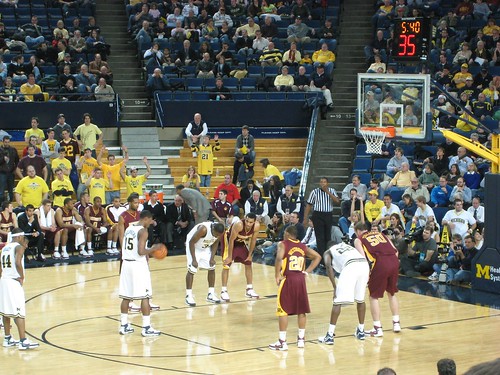
Preparing for a foul shot
Photo by mollyali (flickr.com).
Photo used under Creative Commons license and embedded using  the Flickr share feature.

Whether we are learning how to shoot a basketball, how to study for an exam or how to take a good photograph, we go through some stages.

The Four Stages

1. Unconscious Incompetence - We don't know that we don't know.
We are unaware of what it takes to accomplish a task.  We don't know what it takes to make that foul shot.  We don't know what it takes to get the perfect photograph.

2. Conscious Incompetence - We know that we don't know.
We may not know exactly how to do the task, but we recognize there are things we need to learn.  We become aware that there are certain things we need to do to consistently make that foul shot.  We become aware that there are certain things we need to do to consistently make a good photograph.

3. Conscious Competence - We know that we know.
We are very consciously aware of the steps to doing a task and we can carefully work through the steps of the task.  We know what is needed to make the foul shot and we consciously think through those steps when taking the foul shot.  We know what is needed to make a good photograph and we consciously think through those steps when taking a photograph.

4. Unconscious Competence - We don't know that we know.
We know the task so well, we don't think about it any more.  It has become second nature. We take that shot with little conscious thought.


What was the last skill you remember learning in which you went through these stages?  Can you describe what happened in each stage and when? 

When it comes to photography, what stage are you in now?  What's your goal?  


If you are curious, you may want to check out the article titled "Why Bad Photographers Think They’re Good" and/or the accompanying video.


Note: The Four Stages of Competence has been attributed to noted psychologist Abraham Maslow, Gordon Training International and William Howell in intercultural communication.


Share this post with others. See the Twitter, Facebook and other buttons below.
Please follow, add, friend or subscribe to help support this blog.
See more about me at my web site WilliamHartPhD.com.


Tuesday, January 16, 2018

DigPhotog: Intro to Photography: Photo Criticism II - Andre Cabuche & Kevin Carter (W2-P3) Sp18


Photograph Criticism II

There are a variety of ways of critiquing a photograph.  Below is another way outlined by Andre Cabuche in a Canadian Camera article (2004). Cabuche divides his approach into three parts: technical quality, composition, and emotional appeal.

1. TECHNICAL QUALITY

  • "FOCUS: Is the image sharp? If not, is it intentionally soft and successful?"
  • "CLEANLINESS: Is it free of scratches, dust spots, stains, lens flare, etc?"
  • "EXPOSURE: Is it too light, too dark or just right?"
  • "LIGHTING: Is the lighting too contrasty, too flat or just right?"
  • "COLOURS: Does it have neutral colours or a strange colour cast?"

2. COMPOSITION

  • "BALANCE: Is the image aligned correctly or is it crooked?"
  • "LOGIC: Is the arrangement of the visual elements effective?"
  • "PURPOSE: Is there a strong centre of interest, pattern or design?"
  • "CLARITY: Is it simple, yet complete and without distracting elements?"

3. EMOTIONAL APPEAL

  • "DYNAMIC: Does it grab and keep your attention? Does it have the "wow" factor?"
  • "PROVOCATIVE: Does it excite your imagination, or create a strong emotion in you?"
  • "CREATIVE: Does it show a familiar subject in a new, unusual and yet effective way?"
  • "UNUSUAL: Does it show a very unusual subject in an effective way?"


Use the above approach on Kevin Carter's Pulitzer Prize winning photograph of a starving girl in Sudan.  This photo definitely provokes emotional appeal and raises ethical issues in photojournalism.


Some closing questions:
  • Any similarities or differences between Cabuche's approach and Barrett's approach?
  • What is the relationship between critiquing a photograph and composing a photograph?


Share this post with others. See the Twitter, Facebook and other buttons below.
Please follow, add, friend or subscribe to help support this blog.
See more about me at my web site WilliamHartPhD.com.


DigPhotog: Intro to Photography: Critiquing Photos (W2-P2) Sp18


Photography Criticism


When learning how to critique photographs, a good place to start is with Barrett's book, Criticizing Photographs: An Introduction to Understanding Images.


According to Barret:
  • “Criticism is informed discourse about art to increase understanding and appreciation of art.”

Barrett's Approach to Critiquing Photographs
  • Describe what you see - just the facts, be objective
  • Consider the subject matter
  • Consider how form relates to subject matter.
    • Subject matter + form (focus, contrast, etc.) = content.
  • Let interpretation be communal.
    • Who determines the meaning?  Photographer? Critic?
  • Suggest photographer be silent.
  • Interpret the photograph by questions it raises.
  • Avoid hasty judgments - don't jump to judgement
  • Consider presentational environments.
    • Subject + form + context = content
  • Ask how the photograph would be judged.
  • Consider assumptions/theories - why did the photography do what they did?
  • What are the photographer’s theories about the way the world works?
  • Be honest and open.


Barrett's approach can be summarized as the DIET way of critiquing a photograph.
  1. Describe - just the facts, be objective
  2. Interpret - what does it mean?
  3. Evaluate - is it good or bad, rate it, pass careful judgement
  4. Theorize - why did the photographer take the photo? 

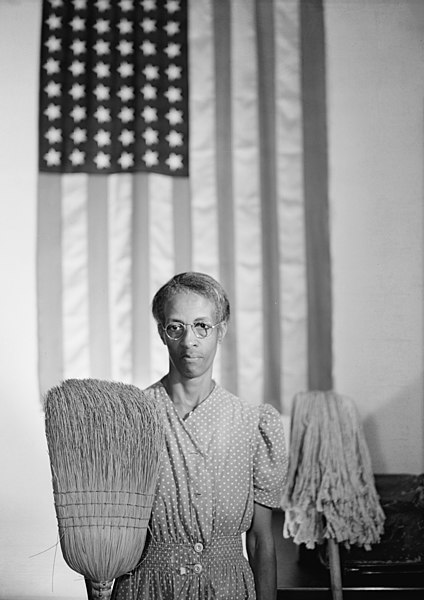
Below is a photo to critique using Barrett's approach.  Start with describe and then...

File:Gordon Parks - American Gothic.jpg
Gordon ParksAmerican Gothic. Portrait of government cleaning
woman Ella Watson. August 1942. (Public domain photo)
   

If you like, you can post below your critique of American Gothic using Barrett's approach.

American Gothic, that sounds familiar.  What was Parks' inspiration for the title of his photo?

For some background on the American Gothic photograph see the clip below starting at about 17:44.


Share this post with others. See the Twitter, Facebook and other buttons below.
Please follow, add, friend or subscribe to help support this blog.
See more about me at my web site WilliamHartPhD.com.


DigPhotog: Intro to Photography: Mentors - Gordon Parks (W2-P1) Sp18


File:Gordon Parks.jpg
Gordon Parks, 1963,
(public domain photo)
One way to begin your study of digital photography is start with a close study of photographs.  Before taking photographs, study photographs.  Be able to critique a photograph first.  Be able to say what is a good photograph and why and then go out and take good photographs based on what you learned in your study of good photographs.

Instead of studying just any photo though, it would be best to start with a study of photographs taken by some of the great photographers.

I'd suggest that you find two or three great photographers that can serve as your mentors.  Start by visiting the Masters of Photography site.  You may find other similar sites online.

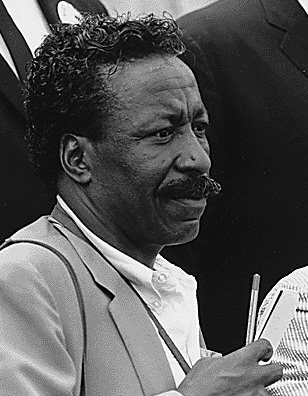
I'd encourage you to consider Gordon Parks as one of your mentors. In addition to being a photographer, Parks was an artist, a composer, an author, and a film director (e.g., Shaft).


See the clip below from about 8:57 to about 17:50.  Wait to view the rest along with a future blog post.


If you are interested, read Gordon Parks, a Master of the Camera, Dies at 93 (NY Times)


Share this post with others. See the Twitter, Facebook and other buttons below.
Please follow, add, friend or subscribe to help support this blog.
See more about me at my web site WilliamHartPhD.com.


Monday, August 29, 2016

DigPhotog: Intro to Photography: Mentors - Gordon Parks (W2-P1) Fa16


Gordon Parks.jpg
Gordon Parks, 1963
Public domain photo
One way to begin your study of digital photography is start with a close study of photographs.  Before taking photographs, study photographs.  Be able to critique a photograph first.  Be able to say what is a good photograph and why and then go out and take good photographs based on what you learned in your study of good photographs.

Instead of studying just any photo though, it would be best to start with a study of photographs taken by some of the great photographers.

I'd suggest that you find two or three great photographers that can serve as your mentors.  Start by visiting the Masters of Photography site.  You may find other similar sites online.

I'd encourage you to consider Gordon Parks as one of your mentors. In addition to being a photographer, Parks was an artist, a composer, an author, and a film director (e.g., Shaft).


See the clip below from about 11:58 to about 19:00.  Wait to view the rest along with a future blog post.


If you are interested, read Gordon Parks, a Master of the Camera, Dies at 93 (NY Times)


Share this post with others. See the Twitter, Facebook and other buttons below.
Please follow, add, friend or subscribe to help support this blog.
See more about me at my web site WilliamHartPhD.com.


Tuesday, January 26, 2016

DigPhotog: Intro to Photography: The 4 Stages of Competence & Photography (W3-P1) Sp16


When studying photography you are learning some knowledge/facts and some skills.  For example, you are learning how to compose a photograph.

How do you take a good photograph?  What's the process?  How do you do it?

Learning how to shoot a good photograph is like learning how to shoot a good foul shot in basketball.

Preparing for a foul shot
Photo by mollyali (flickr.com).
Photo used under Creative Commons license and embedded using  the Flickr share feature.

Whether we are learning how to shoot a basketball, how to study for an exam or how to take a good photograph, we go through some stages.

The Four Stages

1. Unconscious Incompetence - We don't know that we don't know.
We are unaware of what it takes to accomplish a task.  We don't know what it takes to make that foul shot.  We don't know what it takes to get the perfect photograph.

2. Conscious Incompetence - We know that we don't know.
We may not know exactly how to do the task, but we recognize there are things we need to learn.  We become aware that there are certain things we need to do to consistently make that foul shot.  We become aware that there are certain things we need to do to consistently make a good photograph.

3. Conscious Competence - We know that we know.
We are very consciously aware of the steps to doing a task and we can carefully work through the steps of the task.  We know what is needed to make the foul shot and we consciously think through those steps when taking the foul shot.  We know what is needed to make a good photograph and we consciously think through those steps when taking a photograph.

4. Unconscious Competence - We don't know that we know.
We know the task so well, we don't think about it any more.  It has become second nature. We take that shot with little conscious thought.


What was the last skill you remember learning in which you went through these stages?  Can you describe what happened in each stage and when? 

When it comes to photography, what stage are you in now?  What's your goal?

Note: The Four Stages of Competence has been attributed to noted psychologist Abraham Maslow, Gordon Training International and William Howell in intercultural communication.


Share this post with others. See the Twitter, Facebook and other buttons below.
Please follow, add, friend or subscribe to help support this blog.
See more about me at my web site WilliamHartPhD.com.


Tuesday, January 19, 2016

DigPhotog: Intro to Photography: Photo Criticism II - Andre Cabuche & Kevin Carter (W2-P3) Sp16


Photograph Criticism II

There are a variety of ways of critiquing a photograph.  Below is another way outlined by Andre Cabuche in a Canadian Camera article (2004). Cabuche divides his approach into three parts: technical quality, composition, and emotional appeal.

1. TECHNICAL QUALITY

  • "FOCUS: Is the image sharp? If not, is it intentionally soft and successful?"
  • "CLEANLINESS: Is it free of scratches, dust spots, stains, lens flare, etc?"
  • "EXPOSURE: Is it too light, too dark or just right?"
  • "LIGHTING: Is the lighting too contrasty, too flat or just right?"
  • "COLOURS: Does it have neutral colours or a strange colour cast?"

2. COMPOSITION

  • "BALANCE: Is the image aligned correctly or is it crooked?"
  • "LOGIC: Is the arrangement of the visual elements effective?"
  • "PURPOSE: Is there a strong centre of interest, pattern or design?"
  • "CLARITY: Is it simple, yet complete and without distracting elements?"

3. EMOTIONAL APPEAL

  • "DYNAMIC: Does it grab and keep your attention? Does it have the "wow" factor?"
  • "PROVOCATIVE: Does it excite your imagination, or create a strong emotion in you?"
  • "CREATIVE: Does it show a familiar subject in a new, unusual and yet effective way?"
  • "UNUSUAL: Does it show a very unusual subject in an effective way?"


Use the above approach on Kevin Carter's Pulitzer Prize winning photograph of a starving girl in Sudan.  This photo definitely provokes emotional appeal and raises ethical issues in photojournalism.


Some closing questions:
  • Any similarities or differences between Cabuche's approach and Barrett's approach?
  • What is the relationship between critiquing a photograph and composing a photograph?


Share this post with others. See the Twitter, Facebook and other buttons below.
Please follow, add, friend or subscribe to help support this blog.
See more about me at my web site WilliamHartPhD.com.


DigPhotog: Intro to Photography: Critiquing Photos (W2-P2) Sp16

Photography Criticism


When learning how to critique photographs, a good place to start is with Barrett's book, Criticizing Photographs: An Introduction to Understanding Images.


According to Barret:
  • “Criticism is informed discourse about art to increase understanding and appreciation of art.”

Barrett's Approach to Critiquing Photographs
  • Describe what you see - just the facts, be objective
  • Consider the subject matter
  • Consider how form relates to subject matter.
    • Subject matter + form (focus, contrast, etc.) = content.
  • Let interpretation be communal.
    • Who determines the meaning?  Photographer? Critic?
  • Suggest photographer be silent.
  • Interpret the photograph by questions it raises.
  • Avoid hasty judgments - don't jump to judgement
  • Consider presentational environments.
    • Subject + form + context = content
  • Ask how the photograph would be judged.
  • Consider assumptions/theories - why did the photography do what they did?
  • What are the photographer’s theories about the way the world works?
  • Be honest and open.


Barrett's approach can be summarized as the DIET way of critiquing a photograph.
  1. Describe - just the facts, be objective
  2. Interpret - what does it mean?
  3. Evaluate - is it good or bad, rate it, pass careful judgement
  4. Theorize - why did the photographer take the photo? 

Below is a photo to critique using Barrett's approach.  Start with describe and then...

File:Gordon Parks - American Gothic.jpg
Gordon ParksAmerican Gothic. Portrait of government cleaning
woman Ella Watson. August 1942. (Public domain photo)
   

If you like, you can post below your critique of American Gothic using Barrett's approach.

American Gothic, that sounds familiar.  What was Parks' inspiration for the title of his photo?

For some background on the American Gothic photograph see the clip below starting at about 19:00.


Share this post with others. See the Twitter, Facebook and other buttons below.
Please follow, add, friend or subscribe to help support this blog.
See more about me at my web site WilliamHartPhD.com.


DigPhotog: Intro to Photography: Mentors - Gordon Parks (W2-P1) Sp16


File:Gordon Parks.jpg
Gordon Parks, 1963,
(public domain photo)
One way to begin your study of digital photography is start with a close study of photographs.  Before taking photographs, study photographs.  Be able to critique a photograph first.  Be able to say what is a good photograph and why and then go out and take good photographs based on what you learned in your study of good photographs.

Instead of studying just any photo though, it would be best to start with a study of photographs taken by some of the great photographers.

I'd suggest that you find two or three great photographers that can serve as your mentors.  Start by visiting the Masters of Photography site.  You may find other similar sites online.

I'd encourage you to consider Gordon Parks as one of your mentors. In addition to being a photographer, Parks was an artist, a composer, an author, and a film director (e.g., Shaft).


See the clip below from about 11:58 to about 19:00.  Wait to view the rest along with a future blog post.


If you are interested, read Gordon Parks, a Master of the Camera, Dies at 93 (NY Times)


Share this post with others. See the Twitter, Facebook and other buttons below.
Please follow, add, friend or subscribe to help support this blog.
See more about me at my web site WilliamHartPhD.com.


Monday, September 14, 2015

DigPhotog: Intro to Photography: The 4 Stages of Competence & Photography (W4-P1) Fa15


When studying photography you are learning some knowledge/facts and some skills.  For example, you are learning how to compose a photograph.

How do you take a good photograph?  What's the process?  How do you do it?

Learning how to shoot a good photograph is like learning how to shoot a good foul shot in basketball.

Preparing for a foul shot
Photo by mollyali (flickr.com).
Photo used under Creative Commons license and embedded using  the Flickr share feature.

Whether we are learning how to shoot a basketball, how to study for an exam or how to take a good photograph, we go through some stages.

The Four Stages

1. Unconscious Incompetence - We don't know that we don't know.
We are unaware of what it takes to accomplish a task.  We don't know what it takes to make that foul shot.  We don't know what it takes to get the perfect photograph.

2. Conscious Incompetence - We know that we don't know.
We may not know exactly how to do the task, but we recognize there are things we need to learn.  We become aware that there are certain things we need to do to consistently make that foul shot.  We become aware that there are certain things we need to do to consistently make a good photograph.

3. Conscious Competence - We know that we know.
We are very consciously aware of the steps to doing a task and we can carefully work through the steps of the task.  We know what is needed to make the foul shot and we consciously think through those steps when taking the foul shot.  We know what is needed to make a good photograph and we consciously think through those steps when taking a photograph.

4. Unconscious Competence - We don't know that we know.
We know the task so well, we don't think about it any more.  It has become second nature. We take that shot with little conscious thought.


What was the last skill you remember learning in which you went through these stages?  Can you describe what happened in each stage and when? 

When it comes to photography, what stage are you in now?  What's your goal?

Note: The Four Stages of Competence has been attributed to noted psychologist Abraham Maslow, Gordon Training International and William Howell in intercultural communication.


Share this post with others. See the Twitter, Facebook and other buttons below.
Please follow, add, friend or subscribe to help support this blog.
See more about me at my web site WilliamHartPhD.com.


Tuesday, September 1, 2015

DigPhotog: Intro to Photography: Photo Criticism II - Andre Cabuche & Kevin Carter (W2-P3) Fa15


Photograph Criticism II

There are a variety of ways of critiquing a photograph.  Below is another way outlined by Andre Cabuche in a Canadian Camera article (2004). Cabuche divides his approach into three parts: technical quality, composition, and emotional appeal.

1. TECHNICAL QUALITY

  • "FOCUS: Is the image sharp? If not, is it intentionally soft and successful?"
  • "CLEANLINESS: Is it free of scratches, dust spots, stains, lens flare, etc?"
  • "EXPOSURE: Is it too light, too dark or just right?"
  • "LIGHTING: Is the lighting too contrasty, too flat or just right?"
  • "COLOURS: Does it have neutral colours or a strange colour cast?"

2. COMPOSITION

  • "BALANCE: Is the image aligned correctly or is it crooked?"
  • "LOGIC: Is the arrangement of the visual elements effective?"
  • "PURPOSE: Is there a strong centre of interest, pattern or design?"
  • "CLARITY: Is it simple, yet complete and without distracting elements?"

3. EMOTIONAL APPEAL

  • "DYNAMIC: Does it grab and keep your attention? Does it have the "wow" factor?"
  • "PROVOCATIVE: Does it excite your imagination, or create a strong emotion in you?"
  • "CREATIVE: Does it show a familiar subject in a new, unusual and yet effective way?"
  • "UNUSUAL: Does it show a very unusual subject in an effective way?"


Use the above approach on Kevin Carter's Pulitzer Prize winning photograph of a starving girl in Sudan.  This photo definitely provokes emotional appeal and raises ethical issues in photojournalism.


Some closing questions:
  • Any similarities or differences between Cabuche's approach and Barrett's approach?
  • What is the relationship between critiquing a photograph and composing a photograph?


Share this post with others. See the Twitter, Facebook and other buttons below.
Please follow, add, friend or subscribe to help support this blog.
See more about me at my web site WilliamHartPhD.com.


DigPhotog: Intro to Photography: Critiquing Photos (W2/W3-P2) Fa15

Photography Criticism


When learning how to critique photographs, a good place to start is with Barrett's book, Criticizing Photographs: An Introduction to Understanding Images.


According to Barret:
  • “Criticism is informed discourse about art to increase understanding and appreciation of art.”
  • “Criticism is not a coldly intellectual endeavor.”

Barrett's Approach to Critiquing Photographs
  • Describe what you see - just the facts, be objective
  • Consider the subject matter
  • Consider how form relates to subject matter.
    • Subject matter + form (focus, contrast, etc.) = content.
  • Let interpretation be communal.
    • Who determines the meaning?  Photographer? Critic?
  • Suggest photographer be silent.
  • Interpret the photograph by questions it raises.
  • Avoid hasty judgments - don't jump to judgement
  • Consider presentational environments.
    • Subject + form + context = content
  • Ask how the photograph would be judged.
  • Consider assumptions/theories - why did the photography do what they did?
  • What are the photographer’s theories about the way the world works?
  • Be honest and open.


Barrett's approach can be summarized as the DIET way of critiquing a photograph.
  1. Describe - just the facts, be objective
  2. Interpret - what does it mean?
  3. Evaluate - is it good or bad, rate it, pass careful judgement
  4. Theorize - why did the photographer take the photo? 

Below is a photo to critique using Barrett's approach.  Start with describe and then...

File:Gordon Parks - American Gothic.jpg
Gordon ParksAmerican Gothic. Portrait of government cleaning
woman Ella Watson. August 1942. (Public domain photo)
   

If you like, you can post below your critique of American Gothic using Barrett's approach.

American Gothic, that sounds familiar.  What was Parks' inspiration for the title of his photo?

For some background on the American Gothic photograph see the clip below starting at about 19:00.


Share this post with others. See the Twitter, Facebook and other buttons below.
Please follow, add, friend or subscribe to help support this blog.
See more about me at my web site WilliamHartPhD.com.