Monday, September 24, 2018

MediaTheory: Research and Theory Development (W6-P1) Fa18

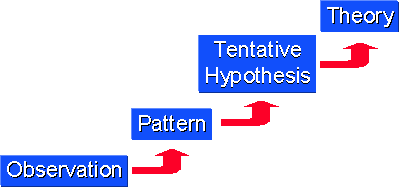
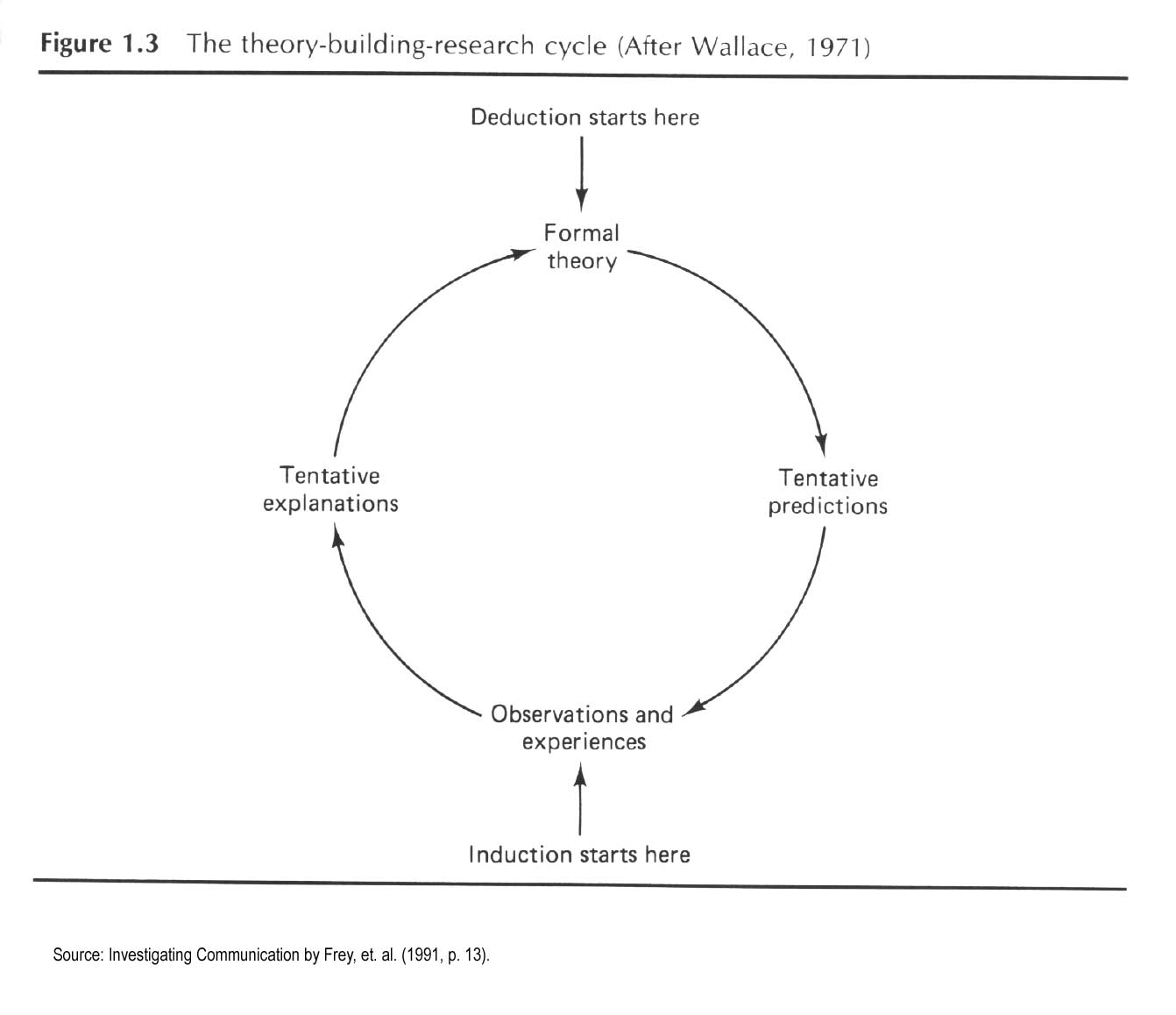
Theory building is a process. It starts with observation and, in a way, ends with observation.  See below.

Related terms:


Deduction: “inference in which the conclusion about particulars follows necessarily from general or universal premises“ (Merriam-Webster).
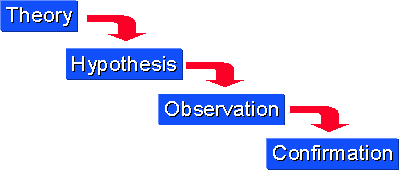


Induction: “inference of a generalized conclusion from particular instances“ (Merriam-Webster).


So, based on the above, where does research fit into the theory building process?  Are they the same thing?  What do the definitions tell us?


Now let’s try to develop some theory.
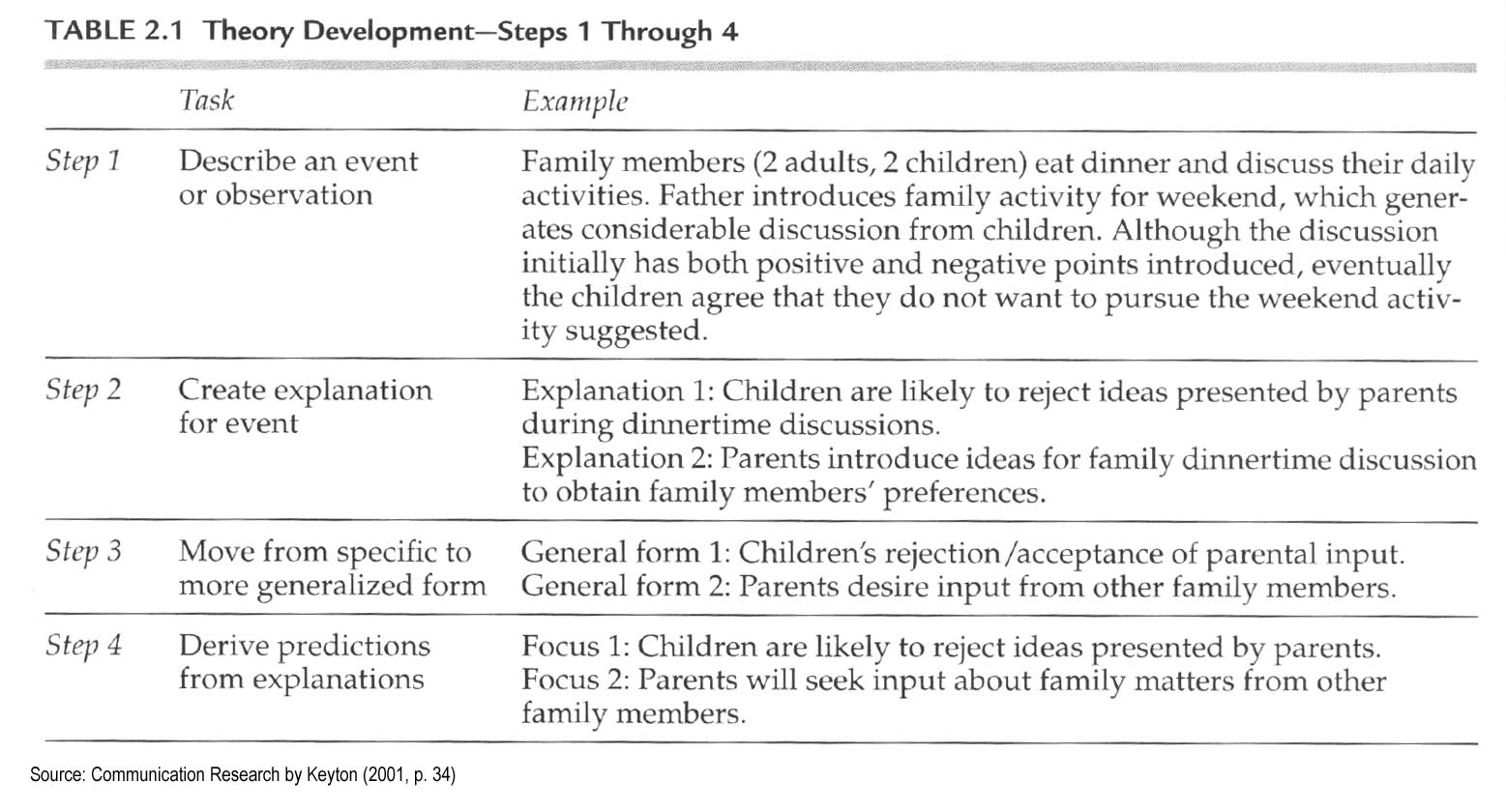


A more complete picture of the theory building process.
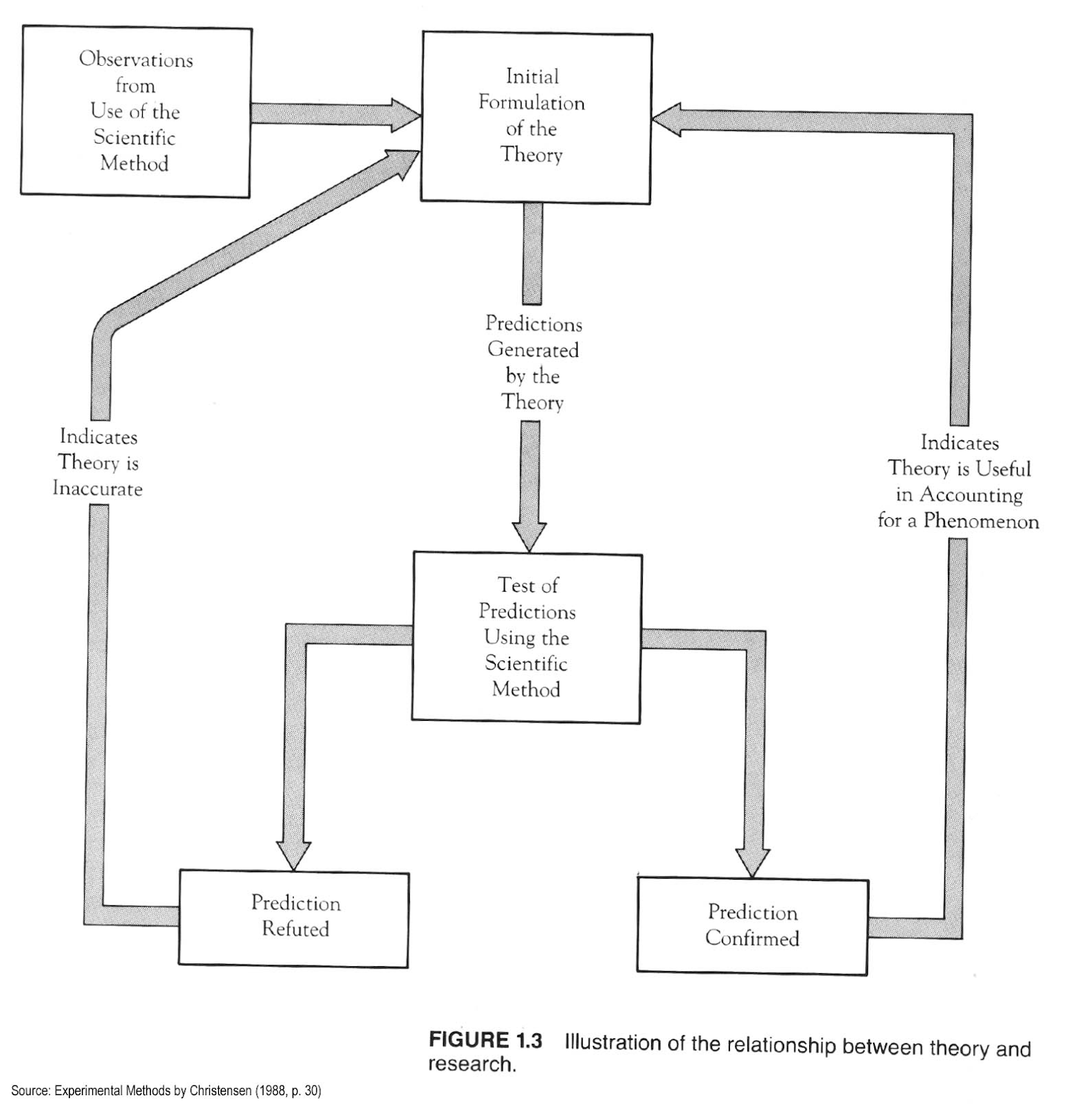


So, based on the above, where does research fit into the theory building process?  Are they the same thing?


Share this post with others. See the Twitter, Facebook and other buttons below.
Please follow, add, friend or subscribe to help support this blog.
See more about me at my web site WilliamHartPhD.com.


MediaTheory: Media, Normative Theories and a Chomskyan Critique (W4-P3) Fa18

One of the general types of theories talked about in the beginning of media theory books is normative theories. It is usually covered along with a general introduction to critical theories.

What is a normative theory and what does it have to do with media?

“Normative theories … don’t describe things as they are, nor do they provide scientific explanations or predictions. Instead, they describe the way things should be if some ideal values or principles are to be realized” (Baran and Davis, p. 61).

When looking at media we could start to ask questions like: How should media be organized?  What relationship should there be between media and government?

One normative political theory that can be applied to media is libertarianism.

Libertarianism: “In the most general sense, libertarianism is a political philosophy that affirms the rights of individuals to liberty, to acquire, keep, and exchange their holdings, and considers the protection of individual rights the primary role for the state” (Stanford Encyclopedia of Philosophy).

Libertarianism in 6 Minutes


Chomsky and his Critique of (American) Libertarianism

“Noam Chomsky ... is an American linguist, philosopher, cognitive scientist, historian, social critic, and political activist. Sometimes described as "the father of modern linguistics," Chomsky is also a major figure in analytic philosophy and one of the founders of the field of cognitive science. He is the author of over 100 books on topics such as linguistics, war, politics, and mass media. Ideologically, he aligns with anarcho-syndicalism and libertarian socialism” (Wikipedia).


Noam Chomsky - Freedom of Speech I


Chomsky and Manufacturing Consent

On of Chomsky’s books that deals critically with media is Manufacturing Consent: The Political Economy of the Mass Media.  This is also a title of a documentary and Chomsky and his idea.

Manufacturing Consent (trailer)


When watching the full documentary, take careful notes on terms like hegemony, manufacturing consent, necessary illusions, media consolidation/concentration, the Herman & Chomsky propaganda model and flak  Note also lists like those associated with the propaganda model.

If you are interested, parts of the Manufacturing Consent doc are available YouTube.
Also, if you interested, you may find "Key points in 'Manufacturing Consent'" helpful.

Also, if interested, there is a more up-to-date video of 5 filters of the propaganda model.

Lastly, if you are interested in what Manufacturing Consent says about today's media landscape, you may want to check out these two videos, one a more recent interview of Herman and the other of Chomsky.


Share this post with others. See the Twitter, Facebook and other buttons below.
Please follow, add, friend or subscribe to help support this blog.
See more about me at my web site WilliamHartPhD.com.


MediaTheory: What is Research? (W4-P2) Fa18

Research is:


“Disciplined inquiry...studying something in a planned manner and reporting it so that others can replicate the process” (Frey et al.)


Keywords: planned, reporting and replicate
What do they mean in this context?


Research, as discussed here, is more than "research" done at the library.  Instead of reading through books and online materials for answers that some other researcher has found, you conduct original research on your own to find the answer.  That is, you conduct an experiment or a survey or a textual analysis or some other research method to find the answer. Someone is not telling you an answer in a book or report, you are finding the answer to your research question on your own.


Two types of research:
  • Scholarly
    • conducted to promote public access to new knowledge
    • usually conducted by a professor at a university
  • Proprietary
    • conducted for a specific audience, results not shared
    • usually conducted by a researcher at a company


Why are results not shared in proprietary research?
Could you give examples of each of the two types?
Which of the two types of research would you be more likely to do in the future?


How does this discussion of research relate to the earlier discussion of science?  Are the doing research as defined above?


How's this definition of research relate to the MythBusters clip shown earlier?


Share this post with others. See the Twitter, Facebook and other buttons below.
Please follow, add, friend or subscribe to help support this blog.
See more about me at my web site WilliamHartPhD.com.