Monday, September 24, 2018

MediaTheory: How is Doing Research Like Being a Detective? (W4-P1) [VID] Fa18

Use the previous posts on theory and research and the video below to answer this question.


How is doing research like being a detective?


Theory: an explanation of how something works based on evidence.


Based on evidence?   Well, a good theory is based on evidence.  How does one evaluate a theory?  Where does supporting evidence fit in the evaluation process?

Back to research and detectives.


Research: "“Disciplined inquiry...studying something in a planned manner and reporting it so that others can replicate the process” (Frey et al.).


Also note that a researcher does research to test and build theories.


What roles do theory and evidence play in this comparison?


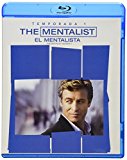
From: The Mentalist


Share this post with others. See the Twitter, Facebook and other buttons below.
Please follow, add, friend or subscribe to help support this blog.
See more about me at my web site WilliamHartPhD.com.



Sunday, September 23, 2018

MediaTheory: Theory, Science & Science Literacy - Neil deGrasse Tyson (W2-P4) Fa18

Science


Below are some possible definitions of science based a presentation by Dr. William McComas (Skeptic Society).


  • “Science is what scientists do.”
    • So, science is what scientist do.  Scientists are those who do science.   This one isn't so helpful.
  • “Science is a method of testing claims and it is not an immutable compendium of absolute truths.”
    • This definition works.  Highlights how science is a process, something we do.
  • “Science is the quest for knowledge, not the knowledge itself.”
    • Again, science is a process, in this case, a quest.


What is the relationship between science and theory.   If science is a process, then theory is?


=======
If you are interested, check out the following info. on science literacy.
Science Communicators and Science Literacy


Below Tyson speaks of science and scientific literacy.
What is scientific literacy?  Is it important?


My Tyson Mashup


1. Stephen Colbert Interview of Tyson (start at 6:15 and get to at least, 25:30, if you can)


2. Tyson at a science festival


3. Audio clip of Tyson speaking at the Science Pub in Portland, Oregon, 2009 (play clip from about 4:00-11:20).


A formal definition of scientific literacy: "scientific literacy is the knowledge and understanding of scientific concepts and processes required for personal decision making, participation in civic and cultural affairs, and economic productivity" (National Academy of Sciences report).


What does Neil DeGrasse Tyson add to the definition?
You may not plan to be a scientist, but should you be science literate?  How do you become science literate?


Note to be science literate also means to be knowledgeable of the general concept of theory and and knowledge of specific theories, especially those relevant to a person chosen area of study.


Share this post with others. See the Twitter, Facebook and other buttons below.
Please follow, add, friend or subscribe to help support this blog.
See more about me at my web site WilliamHartPhD.com.


MediaTheory: Critical Thinkers and Scientists/Theorists (W2-P3) Fa18

Curiosity is one of those aspects that drive theory building.  What are other important aspects?  How does the idea of critical thinking fit in?


One way of defining a critical thinker is to identify some of the traits of a critical thinker, a critical thinker's creed, if you will.

The Critical Thinker’s Creed

  • We are Open-minded.
    • We seek to understand other viewpoints.
  • We are Knowledgeable.
    • We offer opinions/claims backed with logic and evidence.
  • We are Mentally Active.
    • We use our intelligence to confront problems.
  • We are Creative.
    • We break out of established patterns of thinking and approach situations from innovative directions.
  • We are Independent Thinkers.
    • We are not afraid to disagree with the group opinion.
  • We are Curious.
    • We go beyond superficial explanations. We seek deeper understanding.

O-K-M-C-I-C   [What's this?]

So, a critical thinker is a person who follows the creed above (or some similar creed)?
Do you follow this creed?

Would a theorist need to be a critical thinker?


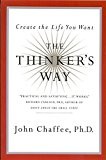
Note: The creed above is based on a section of Chaffee's The Thinker's Way


Share this post with others. See the Twitter, Facebook and other buttons below.
Please follow, add, friend or subscribe to help support this blog.
See more about me at my web site WilliamHartPhD.com.