Monday, September 11, 2017

ComTheory: Critical Thinkers and Scientists/Theorists (W2-P3) Fa17


Curiosity is one of those aspects that drive theory building.  What are other important aspects?  How does the idea of critical thinking fit in?

One way of defining a critical thinker is to identify some of the traits of a critical thinker, a critical thinker's creed, if you will.

The Critical Thinker’s Creed

  • We are Open-minded.
    • We seek to understand other viewpoints.
  • We are Knowledgeable.
    • We offer opinions/claims backed with logic and evidence.
  • We are Mentally Active.
    • We use our intelligence to confront problems.
  • We are Creative.
    • We break out of established patterns of thinking and approach situations from innovative directions.
  • We are Independent Thinkers.
    • We are not afraid to disagree with the group opinion.
  • We are Curious.
    • We go beyond superficial explanations. We seek deeper understanding.
O-K-M-C-I-C   [What's this?]

So, a critical thinker is a person who follows the creed above (or some similar creed)?
Do you follow this creed?

Would a theorist need to be a critical thinker?


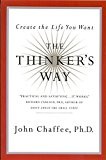
Note: The creed above is based on a section of Chaffee's The Thinker's Way


Share this post with others. See the Twitter, Facebook and other buttons below.
Please follow, add, friend or subscribe to help support this blog.
See more about me at my web site WilliamHartPhD.com.


Tuesday, September 5, 2017

SocietyMassCom: Media Convergence and Some Related Issues (W3-P5)


Convergence: “The coming together of computing, telecommunications, and media in a digital environment” (Pavlik & McIntosh, p. 8).


3 Types of Convergence


  • Technological Convergence: "specific types of media, such as print, audio, and video, all converging into a digital media form” (Pavlik & McIntosh, p. 8).
  • Economic convergence: "the merging of Internet or telecommunications companies with traditional media companies…” (Pavlik & McIntosh, p. 9).
  • Cultural Convergence: the merging of cultural groups.  More people from around the world sharing the same media experience, watching the same film, listening for the same music, etc.(Pavlik & McIntosh).


Global village: “the world viewed as a community in which distance and isolation have been dramatically reduced by electronic media (such as television and the Internet)” (Merriam-Webster Dictionary).


Media Imperialism: “the imbalance and inequality in flow of mass media materials between developed and developing countries, and its subsequent effect on the developing country’s society and culture”(Araby in Frederick,1994).


Can you develop another definition related more to the definition of imperialism above?


Western (American) Media Imperialism.
Q: What American values can be found in its media products?
A: Individualism, materialism, adventurism, etc.


What sort of impact could U.S. media have on other countries and cultures?

South Park video


Share this post with others. See the Twitter, Facebook and other buttons below.
Please follow, add, friend or subscribe to help support this blog.
See more about me at my web site WilliamHartPhD.com.


SocietyMassCom: A Journey to Digital Land: Natives, Immigrants and the Divide (W3-P4)


Ever travel into a strange, new land, another country?  What did that feel like?

Culture shock: “anxiety, frustration, disorientation and stress one experiences when entering a new cultural environment.”


Rapid changes in the world, especially technological can make some people experience a similar feeling.


Digital native: “A term coined in 2001 by author Marc Prensky for a member of a younger generation who has grown up with and is consequently very comfortable using digital media and adapting to rapid technological changes” (Pavlik & McIntosh, 5th ed.).

Digital immigrant: “An individual who grew up in the analog media era and who generally has more trouble adapting to new digital technologies, despite perhaps a desire to use and understand them” (Pavlik & McIntosh, 5th ed.).

Future shock: the experience of "too much change in too short a period of time" which leaves a person feeling  "shattering stress and disorientation.”


Let’s continue with the geographical metaphors and look at another digital issue centering, not around being able to adapt, but just plain access to technology.

Digital divide: “The gap between regions and demographics that have access to modern, digital-communications technologies and those that have limited or no access” (Pavlik & McIntosh, 5th ed.).


Share this post with others. See the Twitter, Facebook and other buttons below.
Please follow, add, friend or subscribe to help support this blog.
See more about me at my web site WilliamHartPhD.com.